

“Tube of steel, with Frankish coil, Argent’s serpent, and daemon’s toil, continental crown, and time’s sting, Columbus’ legs, and slotted things, for a fork of marshaled metal, like a hell-broth boil and bubble.” ― William Shakespeare, Macbeth
Wherein I take a small break from my own projects to make a new fork for an old bicycle from a bit of this and that, some silver and bronze, and a touch of fire.
Background
According to my research, Casenave was a French brand of bicycles started by Louis Casenave (b. 1883, d. 1958) that existed from 1901 through 1971, the remainder of the company closing in 1975.
A call from the owner of one 1970s Sam Benoto Casenave bicycle with a problematic fork took me on a short journey through time and hundreds of miles of travel. The problem: the drive-side fork blade was bent.
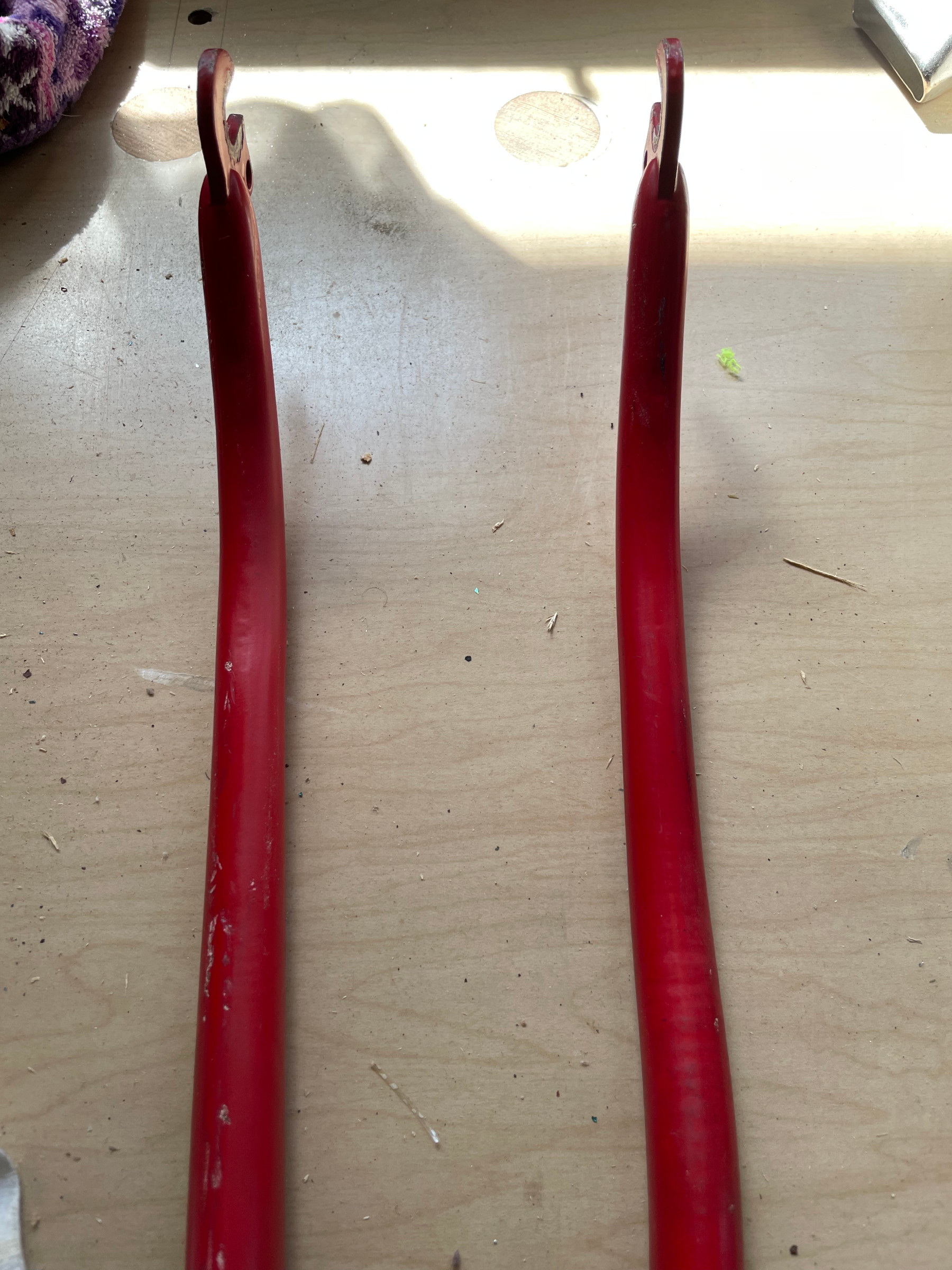
The spacing between the dropouts was 89mm, which is quite a difference from the 100mm it should have been.
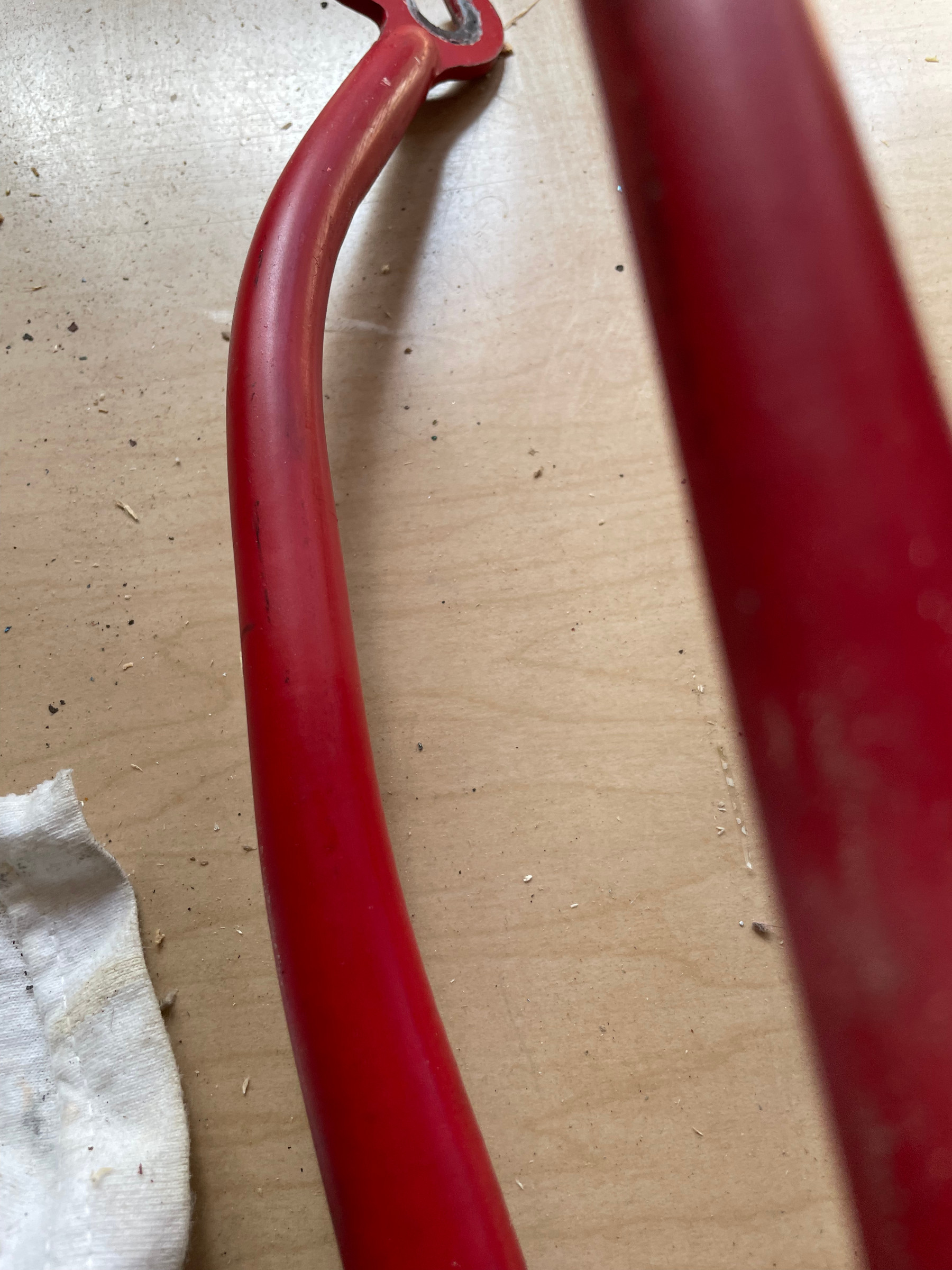
This was not the sort of damage that should be cold-set and put back into service. As it turned out, the fork blade was also cracked near the fork crown socket.
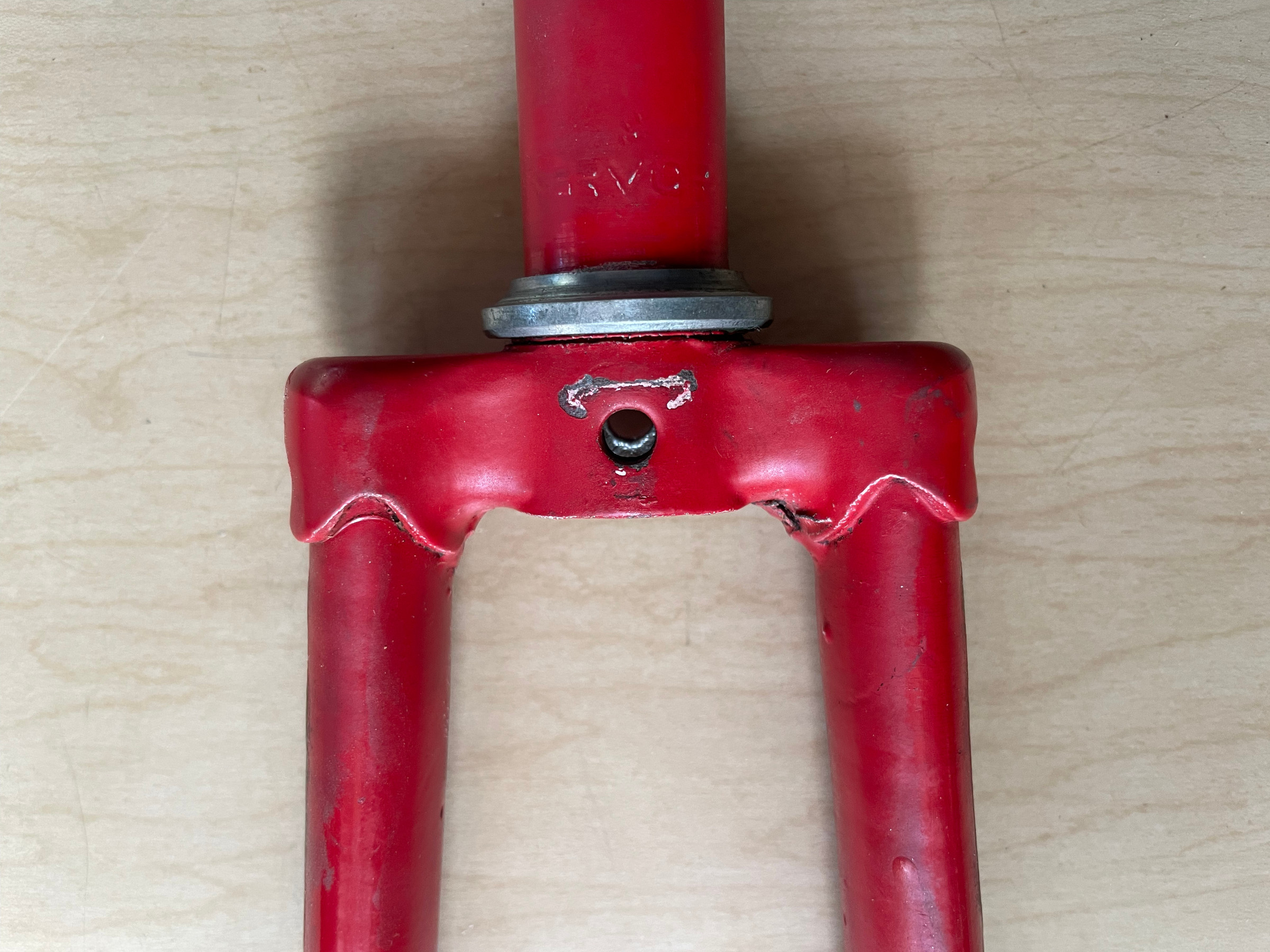
It was either replace the damaged fork blade, or build a new fork.
The Choice
Replacing the fork blade would be an involved process: cut off the offending fork blade; salvage the fork end; grind out the fork crown socket; rake the new fork blade to match the old fork blade; dome and slot the fork blade; attach the fork end; size the new fork blade; braze the new fork blade in with bronze. This is actually more work than building a new fork, plus I didn’t have any imperial oval fork blades that matched the old fork blade.
Building a new fork would mean I could use imperial (larger major diameter, smaller minor diameter) or continental oval (smaller major diameter, larger minor diameter) fork blades, depending on the fork crown I had. I had a stamped fork crown of similar vintage for imperial oval fork blades and a more modern casting for continental oval fork blades.
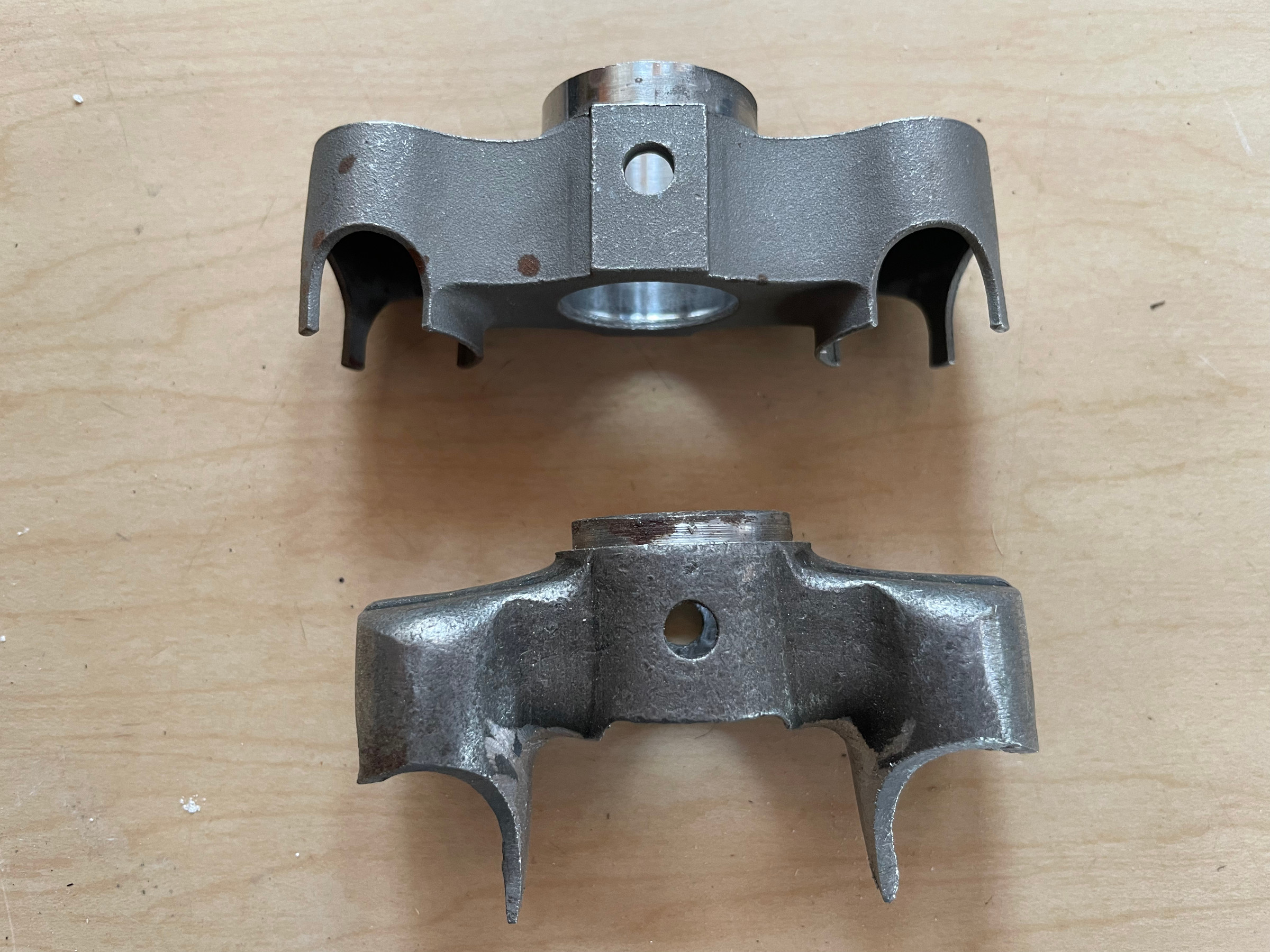
The one set of imperial oval fork blades I had split when raking them, which made using the imperial oval fork crown a moot point, as I was constrained by time to get the owner back on her bicycle. Plus, the crudeness of the stamping was abhorrent to my soul…but the too-modern look of the other fork crown did not suit the overall style of the Casenave either. What to do? I just happened to have an investment-cast stainless steel fork crown for continental oval fork blades in my stash of “fancy” fork crowns. It would do.
La Fourche
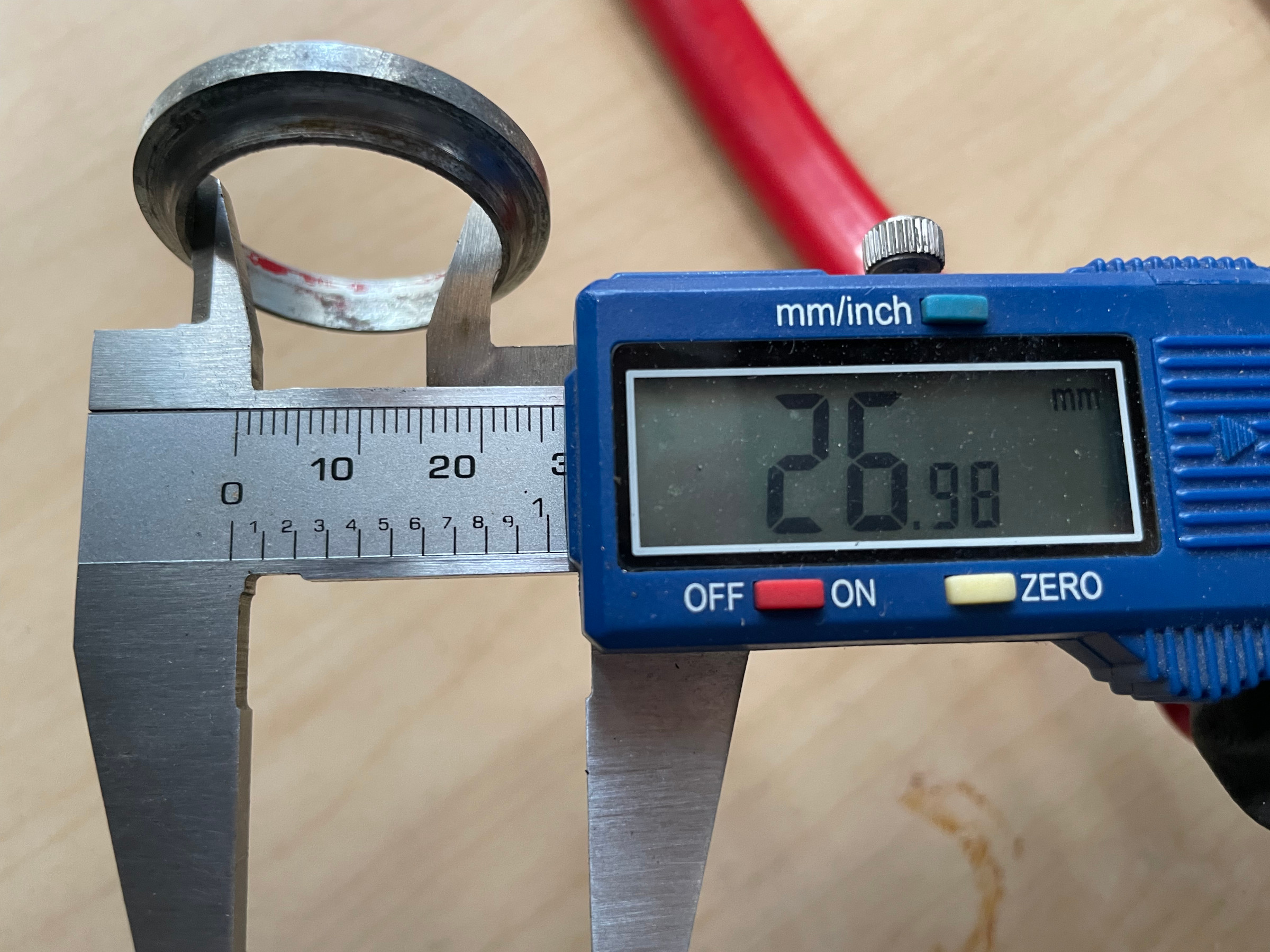
There was another detail from the old fork that needed to be duplicated: the French steerer tube (25.0mm outer diameter, 22mm inner diameter) and threading (1mm pitch). Paul Wyganowski supplied the steerer tube, but it was 0.4mm smaller than the fork crown socket. What to do? Make a shim! I did, and bronze-brazed it to the steerer tube.
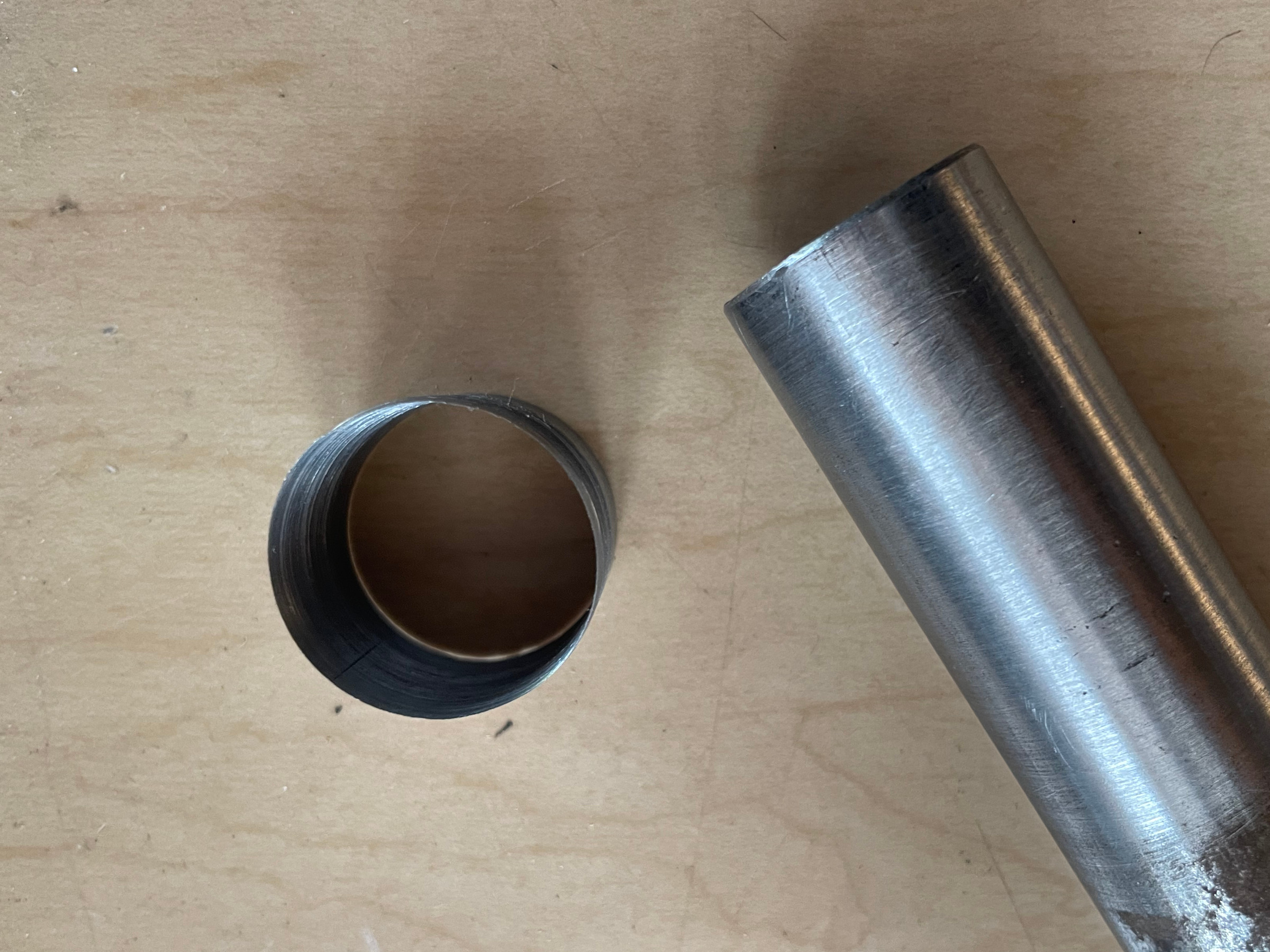
Once the shim was brazed to the steerer tube, it was turned to its final diameter of 25.4mm. Then, the fork blades were raked and slotted, and the rest of the fork was assembled with silver filler: 50% nickel-bearing silver for the fork crown joints, 56% silver for the forged fork ends.
Because of the damage to the original fork, it was difficult to determine the exact fork rake, but it was between 70 and 75mm. The new fork was raked to 72mm and the length was 385mm, matching the length of the original. The fork ends were spaced equidistant from the steering axis to 101mm, which leaves some extra room for ease of installing and removing the front wheel.
The crown race seat was milled to 27.0mm diameter to fit the original French headset. This leaves open the option to use another vintage headset, or fit a newer French-thread Velo-Orange headset (but the crown race seat would need to be milled to 26.4mm…at least, according to their specifications).
Once the fork was assembled, it was time for another trip to Paul Wyganowski’s workshop. The first trip was picking up the French steerer tube and stamped fork crown (which was not used). This time, it was to machine a flat onto the threaded portion of the steerer for the center-pull cable hanger, and to have the fork powder-coated.
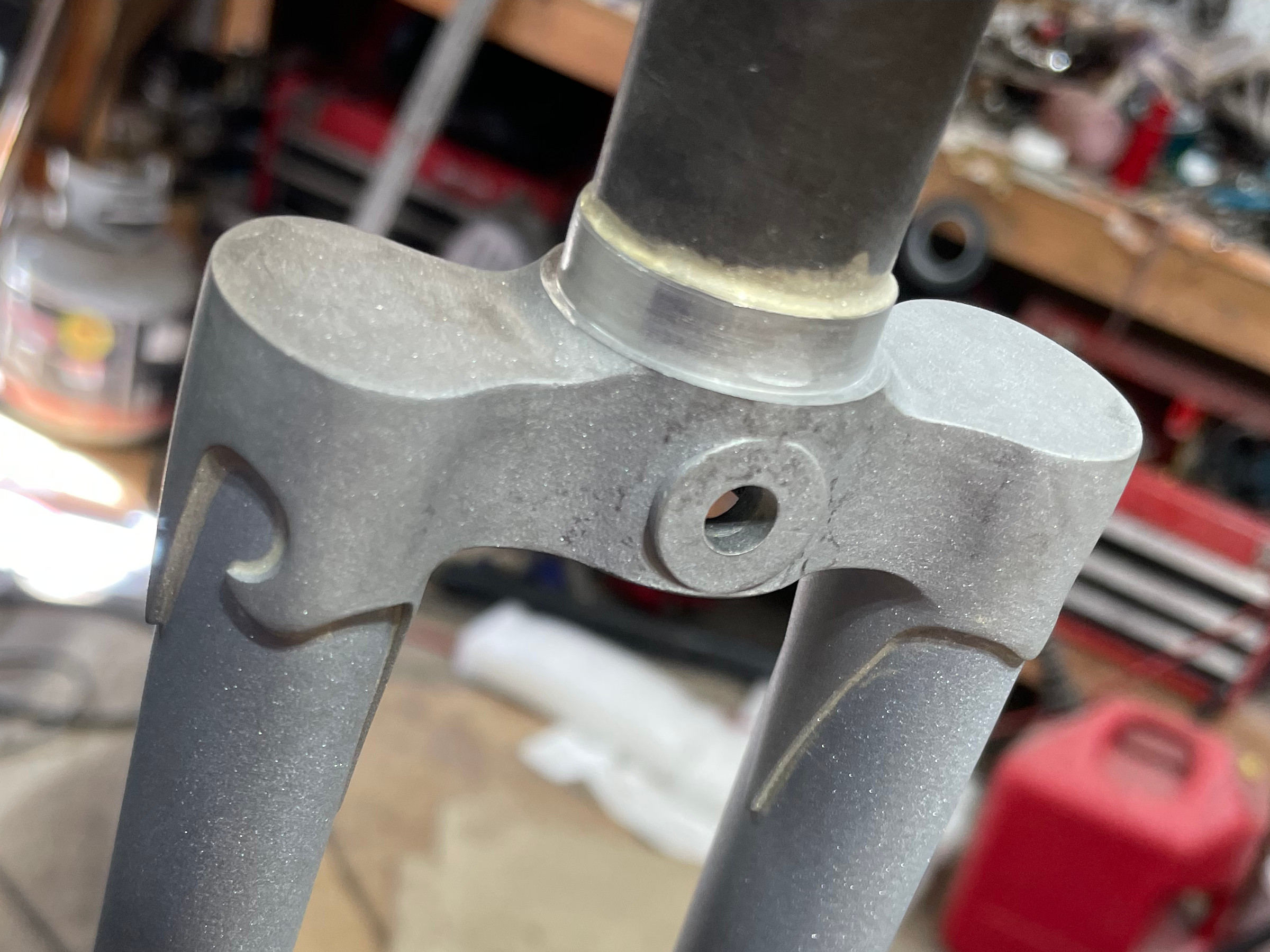
The shiny grey powder turned out very well, but the clear-coat powder on top did not smooth out as it was supposed to, leaving a textured and matte surface in a few places. Serendipitously, it did complement the faded red paint of the frame quite well because of that.
In the end, the owner was satisfied with the new fork. I look forward to photos of the completed bicycle and hearing how her renewed Casenave rides.
Postscript
Do you have a treasured frame or fork that needs repair or replacement? Do you have a treasured bicycle or frame that needs alteration, renovation, or restoration? Well, you can contact this capable frame builder to do the work well and with great care.