

“… ‘many people spend money they haven’t earned, to buy things they don’t want, to impress people they don’t like’ … Any true enjoyment serves to make us feel more deeply connected with everything else. Enjoying the view from a mountain top after climbing it with your bicycle, riding your bicycle in the rain, tuning your bicycle, admiring shelves full of pre-9100-series Dura-Ace, or petting a fluffle of bunnies – all these enrich and enliven us.” ― Laurence G. Boldt, The Tao of Abundance
After decades of spending my earnings to buy the things I wanted, to impress upon my legs the joyful suffering that only riding up hills can bring, my long-held dream of owning and riding a 1978 Miyata Extra Record-like bicycle is nearly realized.
In preparation for several more decades of service, I equip the latest-acquired of these wanted things (the newly renovated, top-of-the-line 1979 Koga-Miyata MXA road racing frameset) with a curated mix of new and refurbished, modern and period-correct vintage parts.
But, at what cost? All choices have consequences, even if we don’t care enough to notice them.
Wrapping Things Up
“You can never nudge the moral compass far from its true north without losing something vital.” ― Angela Lansbury
Business is Business
For all too many people, a cow is food or raw materials. Many a smilodon has feasted on creatures like the antecedents of the domesticated cow with nary a moral qualm. The murder victim often suffered; the end was seldom quick; the feasting often began before the victim was dead. The reason was survival.
The modern, mechanized method of slaughter is efficient and relatively quick. The pretext given is that people need to eat; the actual reason is direct and indirect profit. There is no moral ambiguity: the victim is unwilling and the result is death.
Until an Ameglian Major cow is engineered (the ultimate form of engineered consent), this is murder by any reasonable definition, regardless of the face it wears or to what degree suffering is involved.
Due to our choices, the consumption of meat continues to drive the wholesale murder of cows in this country (US of A) and worldwide. And there is a lot of waste – waste from raising the cows and following their slaughter. It is some of this waste that goes into the creation of the leather saddles, shoes, and handlebar tape and wraps that equip and accessorize our bicycles. Does this make me an accessory of a different kind?
The saddle on this 1984 Koga-Miyata Luxe is covered with leather. The saddle was chosen for its comfort, not its covering. The Selle Italia SLK saddle chosen for this Luxe project was purchased nearly 20 years ago, which was the last time I purchased a leather or leather-covered saddle. Selle Italia could have made the same saddle with a synthetic or natural fiber cover (and I would have gladly purchased it), but they did not. They chose to use durable, cheap waste material as the covering: thin cow skin.
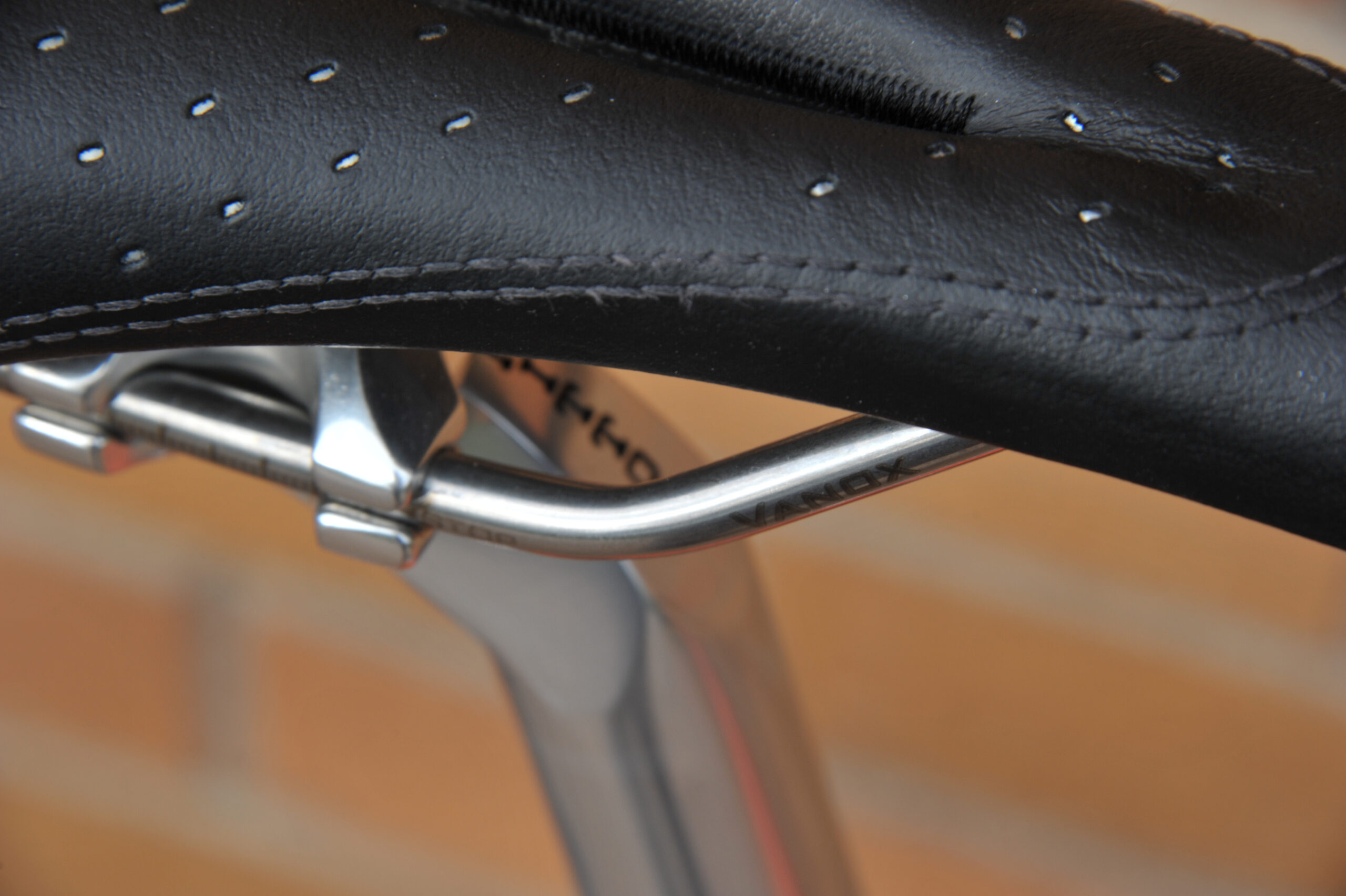
Many manufacturers use waste material from institutionalized, wholesale murder that, like war, is an irredeemable part of every-day human expression. And, I knowingly chose to buy these products, which constitutes indirect support of the practice.
That’s how we always find a human in the middle of every inhumane act.
The handlebars on this 1984 Koga-Miyata Luxe are also covered with leather. The handlebar wrap was chosen for its appearance, not the material. Walnut Studiolo appears to use leather that would otherwise go to waste (due to the slaughtering of cows for meat) to make their handlebar wraps and tapes. They could have made the same wraps and tapes with a synthetic or natural fiber, but didn’t.
Sadly, when the mind is set in a certain pattern, it is difficult to see any other way of doing things.
The Walnut handlebar wrap I used is well-made and of high quality. It is also likely too thin to be comfortable on the longer rides I enjoy – I can feel the unyielding aluminum quite distinctly through the thin leather. It is on par with cotton handlebar tape with regard to [dis]comfort. Normally, I would have preferred a synthetic cork wrap or tape. But, the visual effect is period-correct and in the same style as that of the 1979 Koga-Miyata Pro Luxe.

Every decision is a reflection of self, and an opportunity for self-improvement and betterment of the world as a whole (not just human societies), whether or not that matters to the decider. For the sake of style, I chose to make moral and material compromises. And this points my moral compass in a disquieting direction.

Despite, and because of, my questionable life choices, I also choose to cherish this saddle, this handlebar wrap, these toes straps, and my leather work boots, and to be grateful to the cows whose lives were taken to make them – their skins a morbid expression of humanity’s poor choices in general. In memoria, I named them Beatrice, Bessy, Misaki, and Bertha. Naming them is a reminder of my indirect part in their demise, as well as a reminder to make healthier and more thoughtful choices every day.
While the immoral demon was being castigated, the diligent demon went to work.
Just Rewards
As everyone surely knows, working with bicycles is not merely a physical act, but part of a spiritual and mental journey. At this point in my life and, particularly, at this point in this project, my degree of spiritual and mental growth were still being weighted, but not quite ready for weighing.
“No one saves us but ourselves. No one can and no one may. We ourselves must ride the path…” ― Jitensha Buddha, Mutterings of Buddha
Wrapping the handlebars was a meditative learning experience and a good way to practice patience.
First, soak the leather: I let it soak overnight. The next day, it was patted dry before starting the wrap.
Next, use a little bit of masking tape to hold each starting end in place, to get everything aligned and to make the starting stitchs easier to place. I chose a cross-stitch pattern to close each seam.
Finally, stitch each seam carefully together, starting out with equal lengths of thread and maintaining a consistent pattern. The first side had to be completely redone just before I could finish: somehow, at the start, I let one side of the thread become longer than the other. Other than that, it went well. Surprising myself, I even managed to get the brake levers where I wanted them.
The end-result is visually appealing and pleasant to the touch, but could be uncomfortable for my bare hands for more than an hour or two on the bicycle. I don’t always ride with padded gloves, but they may become mandatory with this bicycle.
Staying focused and being patient were their own reward. The well-positioned brake levers turned out to be a pleasant bonus.

Ambivalence
I like the hand-feel of fine leather (it is skin, after all), but I dislike everything else about it. It rattles the bones and taints the soul.
This is my first time using leather wrap, and it will probably be the last. Perhaps I am too thin-skinned myself?
Every-Day Silver
This drivetrain went together quickly and without fuss. Installing a new, high-quality drivetrain is always a pleasure.
To tune the drivetrain, I installed 7400-series Dura-Ace cassette cogs (13-18T), a set of 6400-series Ultegra chainrings (42/52T), and the SRAM PC-870 chain: silver is for every day; gold is for special occasions; struggling up hills is for all occasions.


Tuning the drivetrain was as simple as setting the limit screws on the dérailleurs, placing and tightening the shift cables, sizing the chain, and running through the gears. Everything just worked from the get-go…except for one thing.
Broken Ideals
“I do not use friction mode for my own amusement.” ― Jane Austen, Pride and Prejudice
It was at this point that the broken indexing mechanism reminded me of why it was in my “broken, and too beautiful to let go” box and not recycled long ago: it would not hold the highest cable tension position (lowest gear), but otherwise worked and looked like new. Friction mode worked well, of course.
One of the goals of this build was to re-use my SL-7400 shift levers, precisely because of their indexing. To do without was not as disappointing as I expected. I found out on the shifting-check-ride that my muscle memory worked just as well as indexed mode, without the annoyingly sharp clicks. Still, I had some no-added-cost options, if I found friction-mode too vexing in the long term. For now, it would do.
Keeping It New
Before the test ride, I needed photos of my brand-new-to-me-and-the-world, unique 1984 Koga-Miyata Luxe bicycle! And that meant outfitting it for this special occasion in gold.

This 1984 Koga-Miyata Luxe was built to be ridden. Swapping out the gold and black-anodized parts to keep from wearing them out is its own form of wear-and-tear. So why bother, when a photograph (or a hundred) will keep it “new” forever?
I wasn’t quite ready to put the first scratch on my precious black-anodized chainrings, and the pedals will probably end up on my fixed-gear anyway (for the coordination challenge, of course), so I took a bunch of photos. Restraint and common sense keep me from posting them all.
Realization
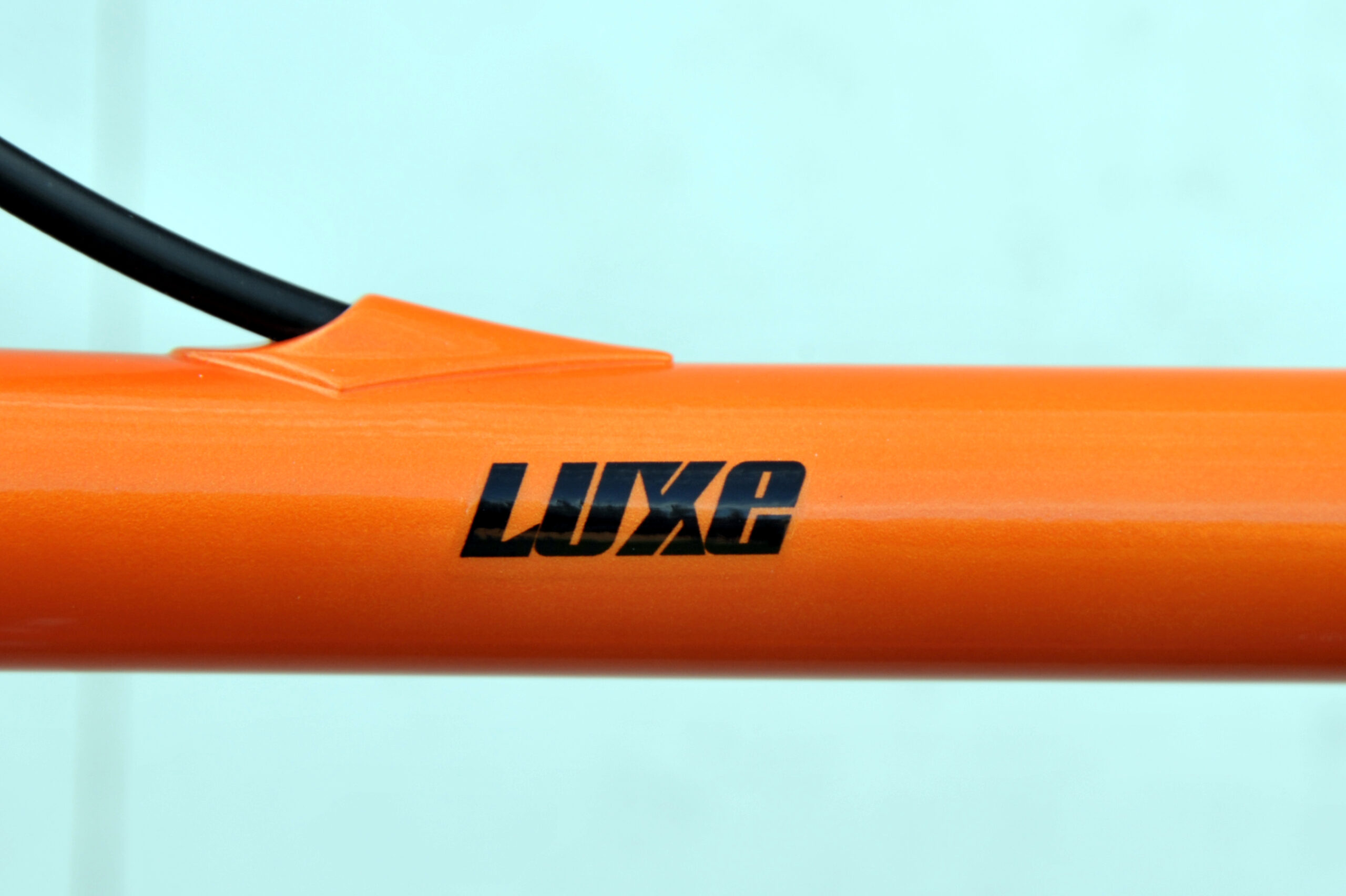
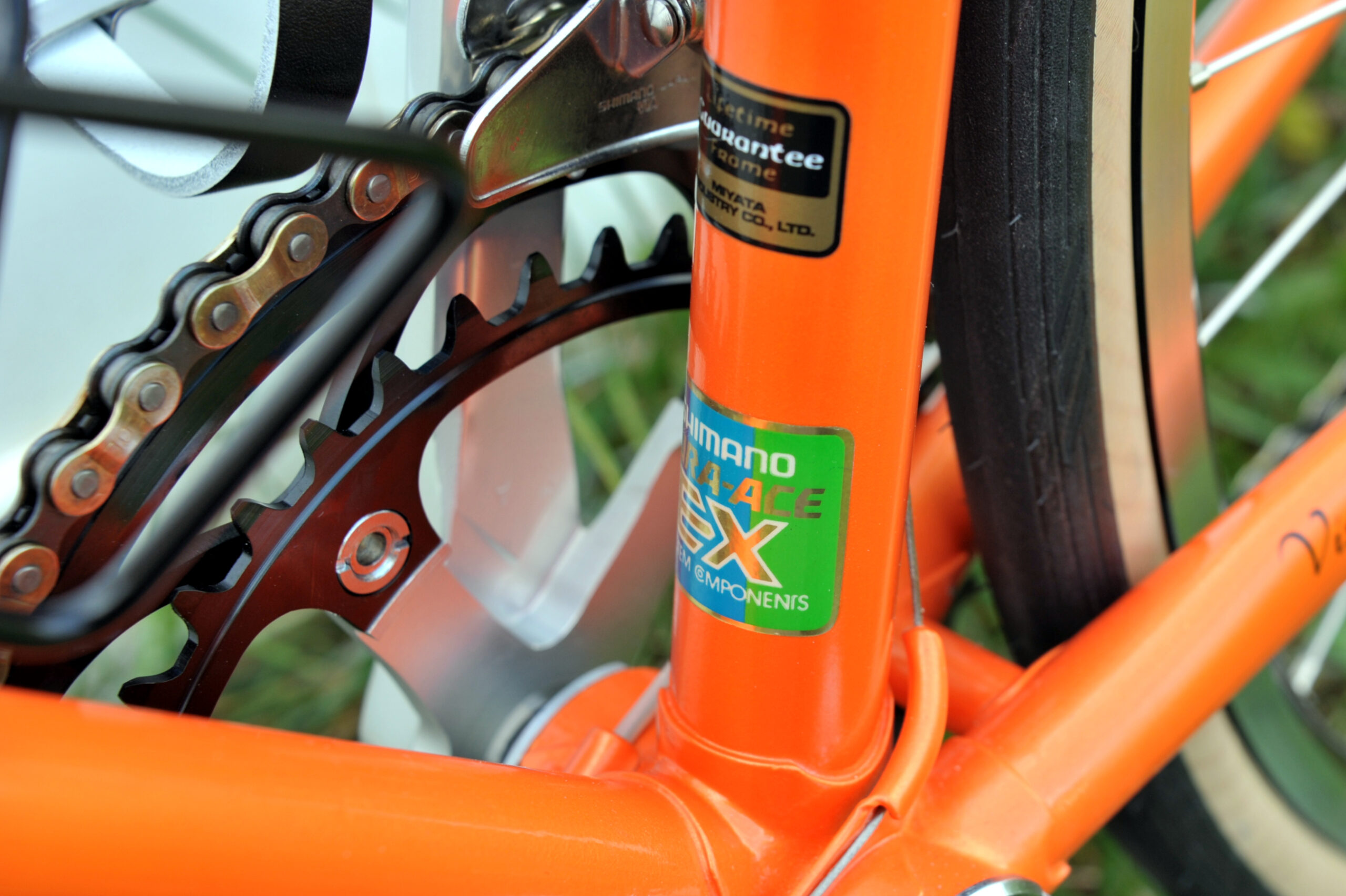
Here are two photographs of my new “1984” Koga-Miyata Luxe. Except for the missing second water bottle cage, otherwise exactly as I originally envisioned it:


And a photo gallery with a few more photos:






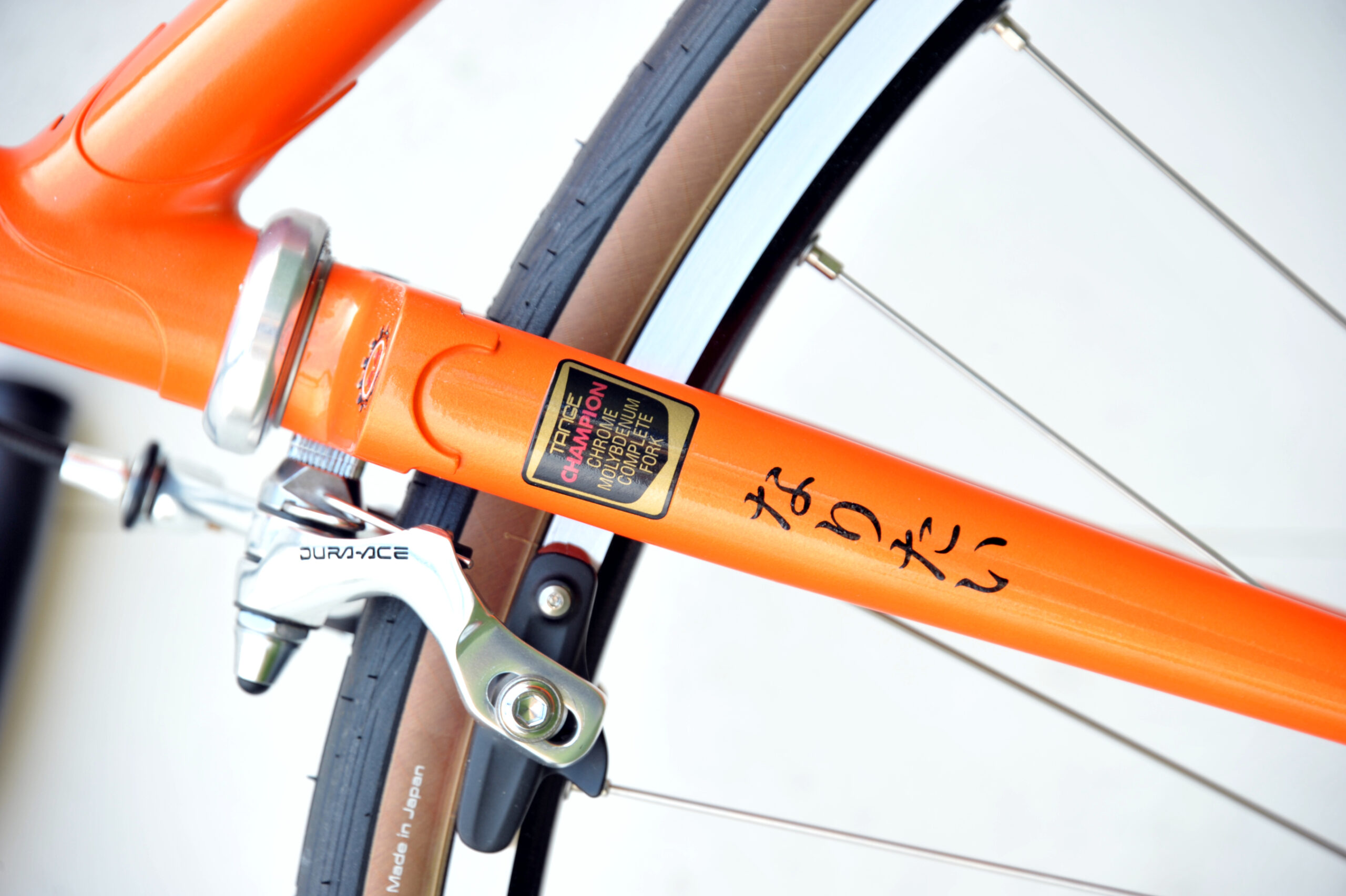


The first ride called to me, but the four-day forecast was for cold rain. When the rain stops, and the weather warms up a little, I may go for a test ride…
Postscript
Do you need or want a beautiful custom bicycle or replica? Do you have a treasured bicycle that needs repair, alteration, renovation, or restoration? Well, you can contact this introspective frame builder to do the work well and with great care.