
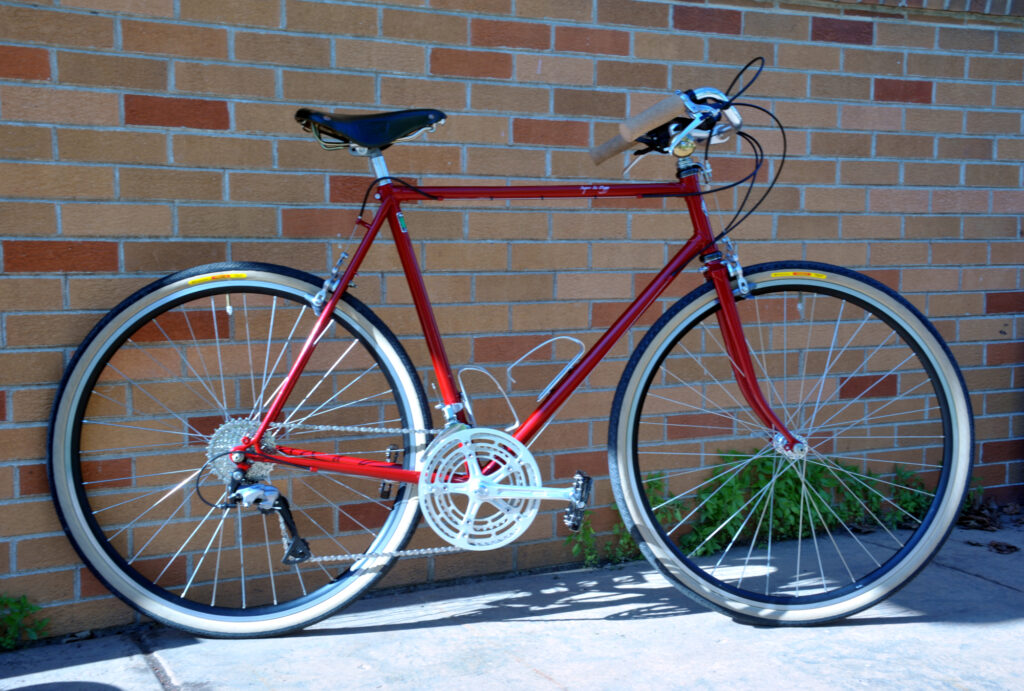


Alteration and renovation of a one-owner 1976 Schwinn Super LeTour (model SL-3) mid-range leisure bicycle, adapted to fully embrace leisurely riding on varied road surfaces. The frame was manufactured (1975) by Panasonic, Japan, for Schwinn.
Description

The Schwinn Super LeTour (12.2) was a mid-level recreational bicycle imported by Schwinn under their “Schwinn-Approved” label. The frame was good-quality for the era: bronze-brazed; double-butted CrMo top and down tubes, high-tensile carbon-steel seat tube, stays, and fork; stamped, short-point lugs; forged horizontal dropouts and fork ends with eyelets. The frame is well-made, durable, and rides very well.
The Schwinn Super LeTour was originally outfitted with economical, good-quality Shimano, Takagi, and Sakae Ringyo (SR) components. It was available in metallic sky blue, flamboyant red, and silver mist.
History
This Schwinn Super LeTour bicycle was purchased by my brother in 1976 from Park (Maplewood) Schwinn, Minnesota. The frame was manufactured by Panasonic, Japan, in 1975. This bicycle is a 1976 model year. The original color was flamboyant red. It was originally outfitted with Shimano 600 rear and Shimano 60 front dérailleurs; Takagi swaged, cotterless crankset and Takagi bottom bracket bearing assembly; 27″ Araya rims; Shimano large-flange hubs; SR stem, handlebars, and seatpost; refitted with a Brooks B17 saddle shortly after purchase (1976); Dia-Compe “G” side-pull brakes and drilled brake levers; KKT pedals with toe clips and straps; Shimano five-cog 14-28T freewheel.
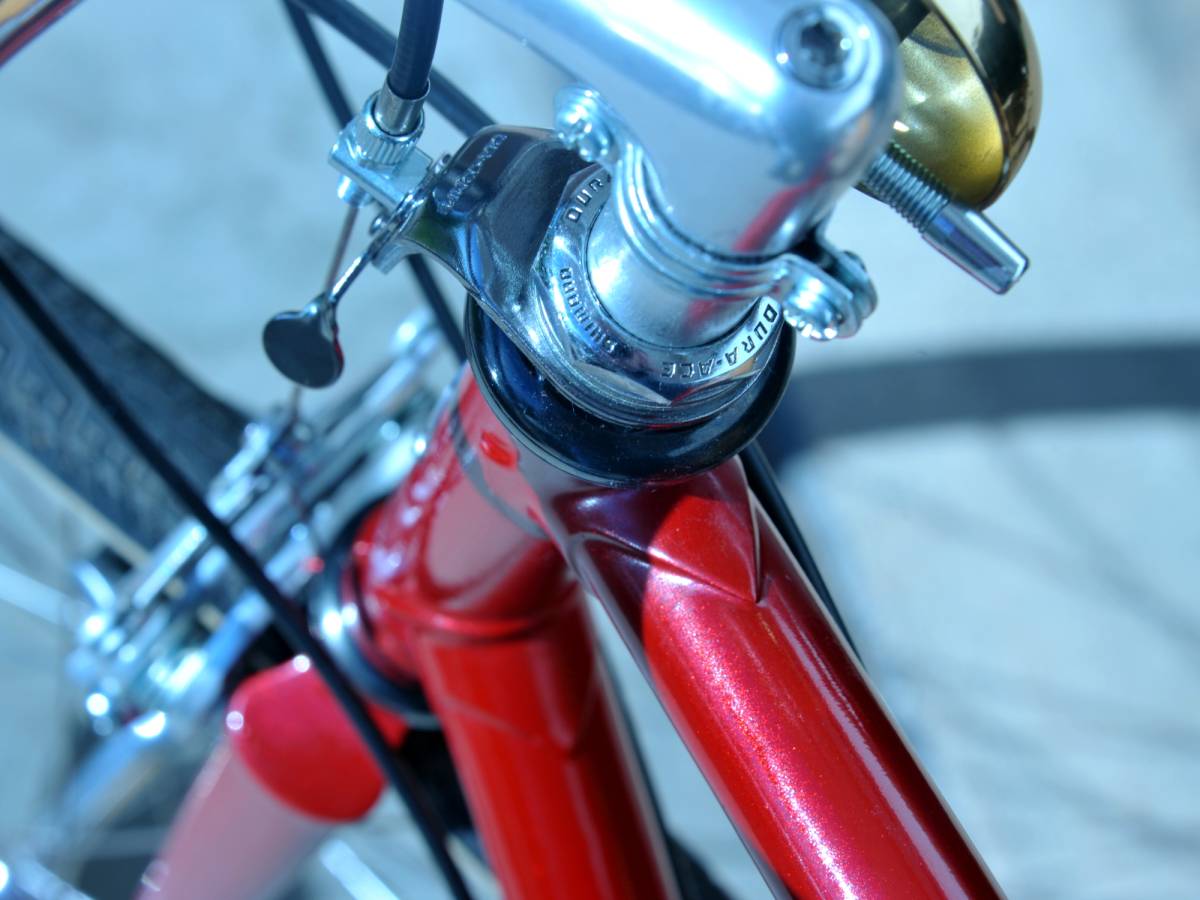
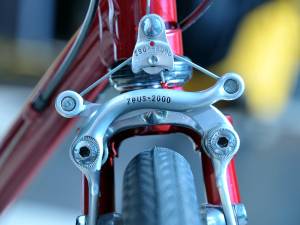
Some time during the early 1980s, the front fork had been replaced with an after-market, chrome Tange fork. The frame was repainted with synthetic lacquer in 1985 by my brother: over-all maroon metallic, with red metallic head tube and seat tube. At that time, it was also upgraded with new rims (Weinmann) and donated used parts: SunTour Superbe rear dérailleur; SunTour Cyclone front dérailleur; SunTour MicroShift shift levers; Avocet Model I (Omas) low-flange hubs; first-generation Dura-Ace headset (UA-100) in black chrome steel; Zeus 2000 center-pull brakes and brake levers.
The front shift lever was lost some time in the 1990s, so the SunTour Cyclone front dérailleur had been removed (and misplaced or lost). Around 2014, a set of SunRace budget shift levers and a SunTour XC front dérailleur were refitted. At that time, the brake levers were replaced with Tektro SCR brake levers, new handlebar tape was installed, and the decomposing 40+ year-old Brooks saddle was replaced with a new, Brooks B17. In 2025, the pedals, toe clipes, and straps were replaced with black Velo-Orange Sabot pedals and the dérailleurs adjusted. However, the shifting was still sub-optimal. By then, the paint had seen better days.
This particular frame has seen continuous service for fifty years and has great sentimental value beyond its utility. The frame is rust-free, well-maintained, and structurally sound: well worth the effort to maintain, update, renovate, and ride for the next fifty years. But, it could use a bit of “refreshment”.
Alteration & Renovation
This alteration and restoration aimed to extend the life and utility of this treasured bicycle. The alteration and renovation were a surprise gift for my brother, performed under the pretext of giving it “a little tune-up” and “quickly swap out the handlebars for upright bars” in time for summer. Classic bait-and-switch. Your sibling(s) have probably done the same to you.
I was working on similar projects, so the timing was right to get the frame stripped of paint and make the alterations quickly. Since I was the one who does the tune-ups and over-hauls of my brother’s bicycle, I took the opportunity liberty to make my life easier by imposing my imperious views on all things bicycle. The side-effect was that my brother would enjoy his bicycle more. Probably.
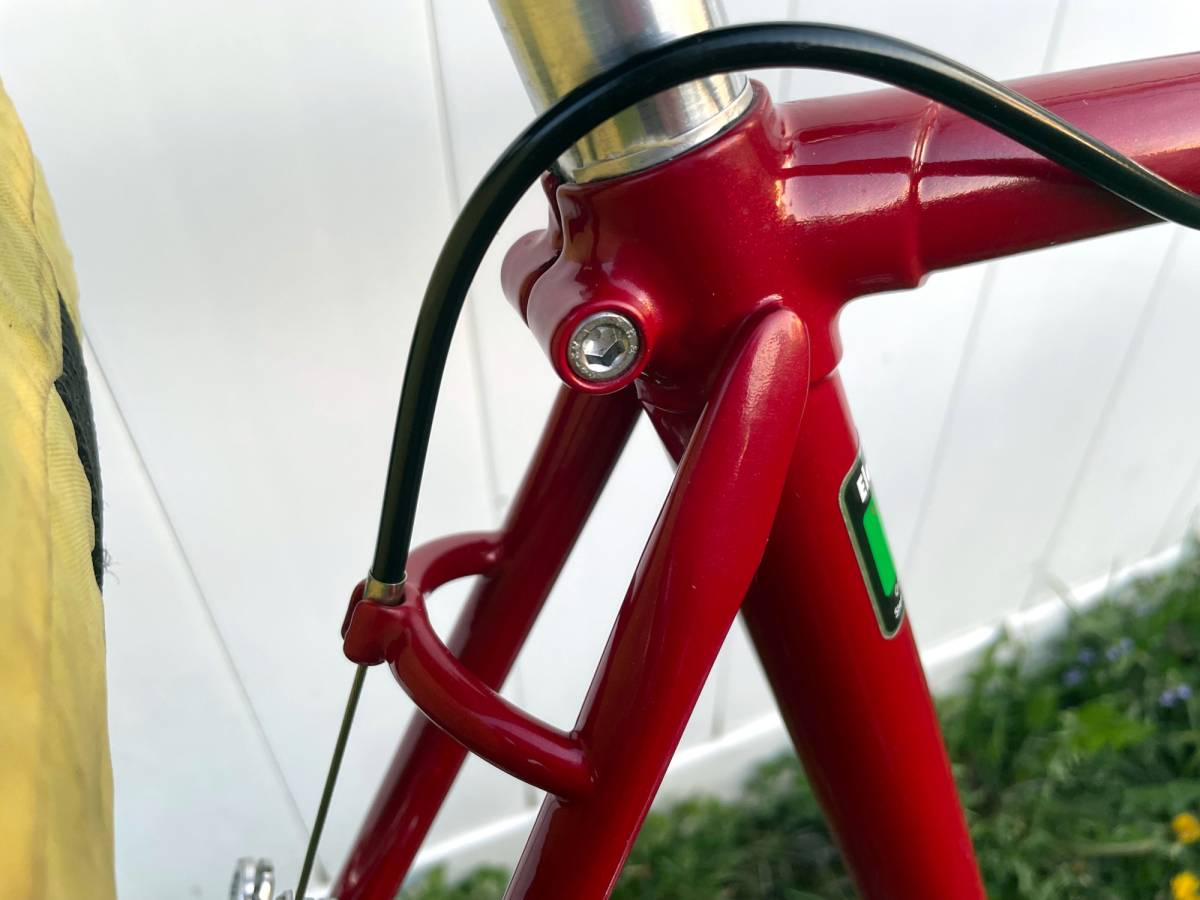
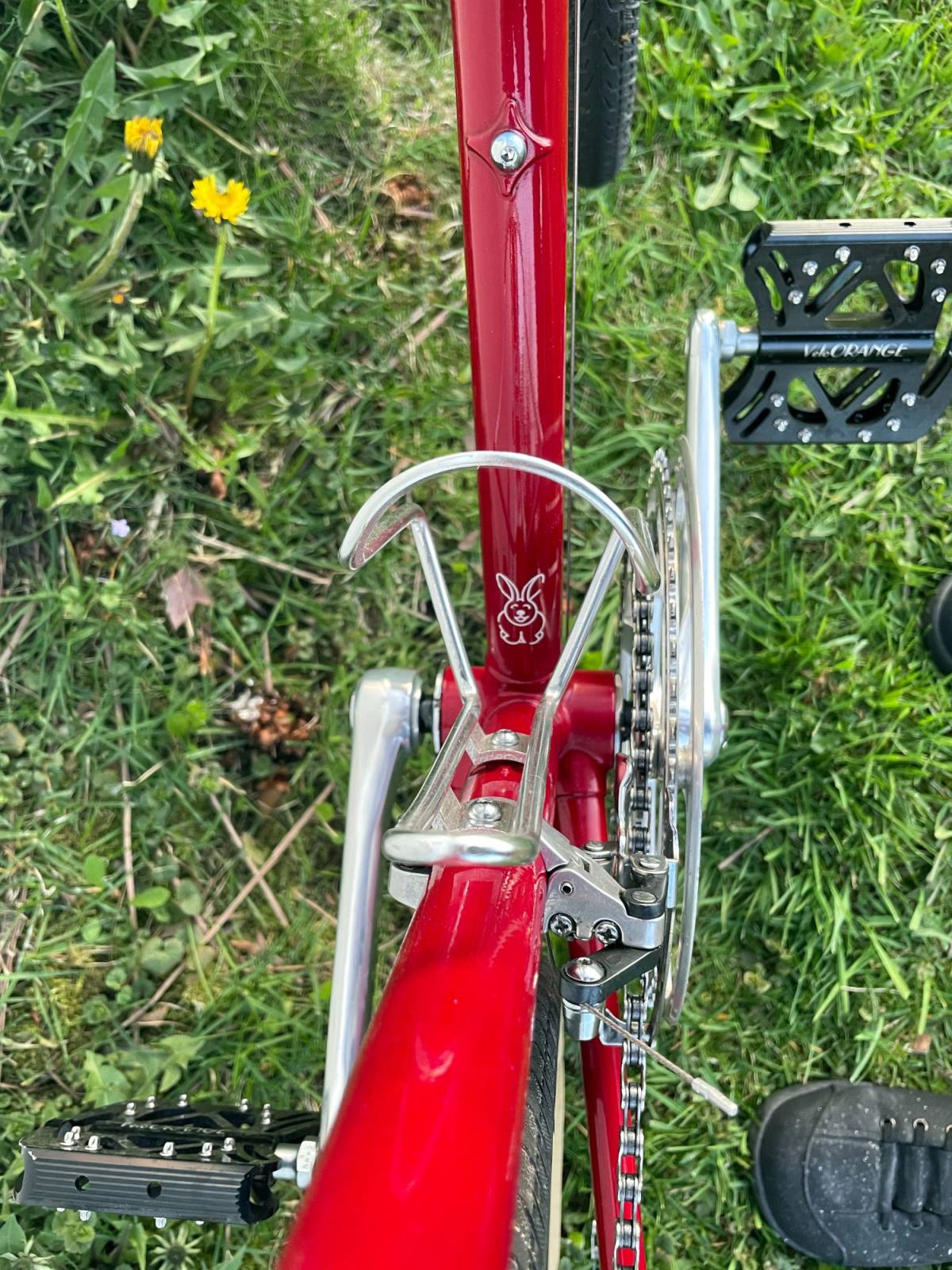
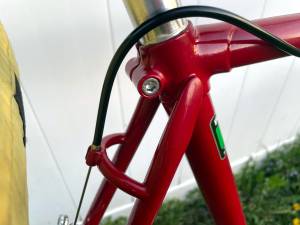
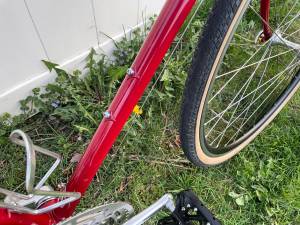
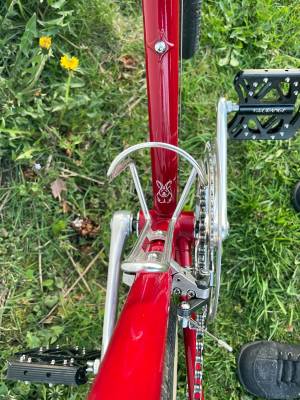
It may be apparent (or not) that I disdain clamped-on components. With one exception (for economy), I imposed my disdain on this frame too, knowing my brother would appreciate the outcome: brazed-on water bottle cage mounts (finally, after 50 years!); sturdier seat binder with Allen bolt; stress-relief hole in seat lug; drain hole in bottom bracket; rerouted shift cables (under the BB shell); rear center-pull brake cable arch/stop; dérailleur cable stops on the down tube.
I removed the stops for the shift lever clamp and removed the over-the-BB-shell cable guides. I removed the existing rear dérailleur cable stop on top of the chain stay and brazed on a new one under the chain stay to accommodate the new cable routing.
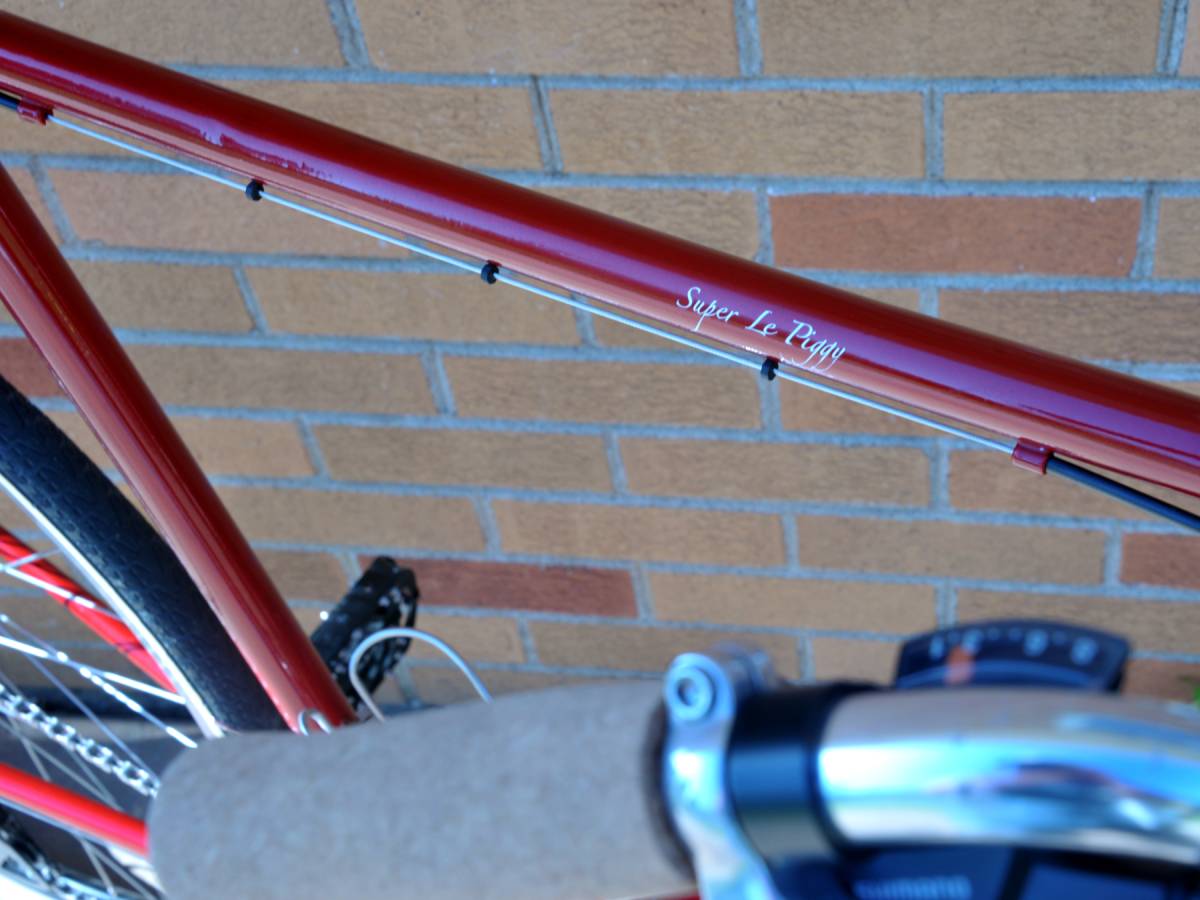
The alterations went quickly. I did not replace the top tube, even though it was slightly bowed down – I wanted to retain the character it conveyed…that, and I was too lazy to replace it. I’m not that nice of a brother. However, I filled the worst of the top tube dents with silver, but didn’t remove all of them completely, for the same reason(s).
The frame and fork were checked on their respective alignment tables after the alterations were complete. Although I made no alterations to the fork, I still checked its alignment: perfect. The frame was also acceptably straight: no twist, less than 0.5mm deviation from centerline. The rear end had been re-spaced to 130mm sometime during the 1990s, the old wheels also re-spaced and re-dished at that time. The inevitable outcome since then was one of two things: broken dropouts or bent rear axle. In this case, the forged dropouts proved sturdier than the Avocet rear hub axle.
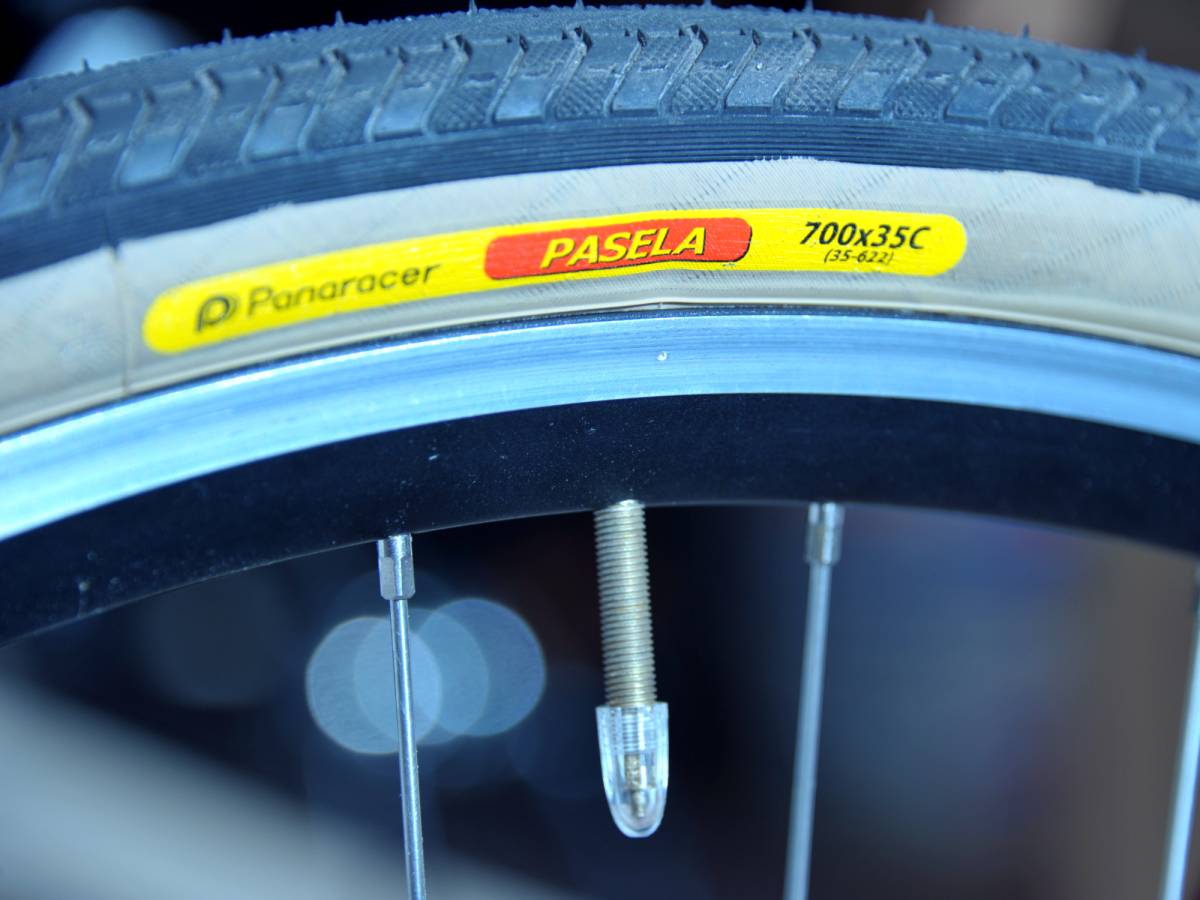
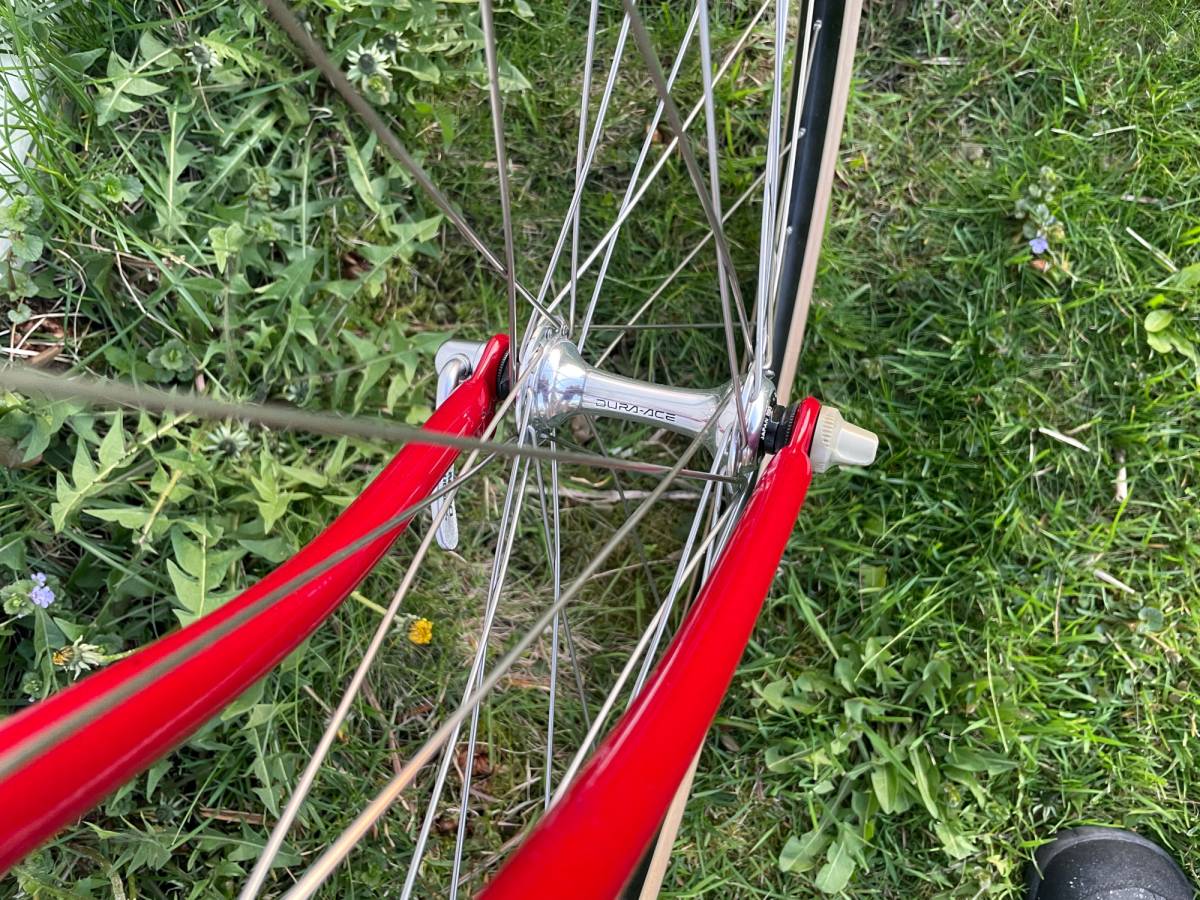
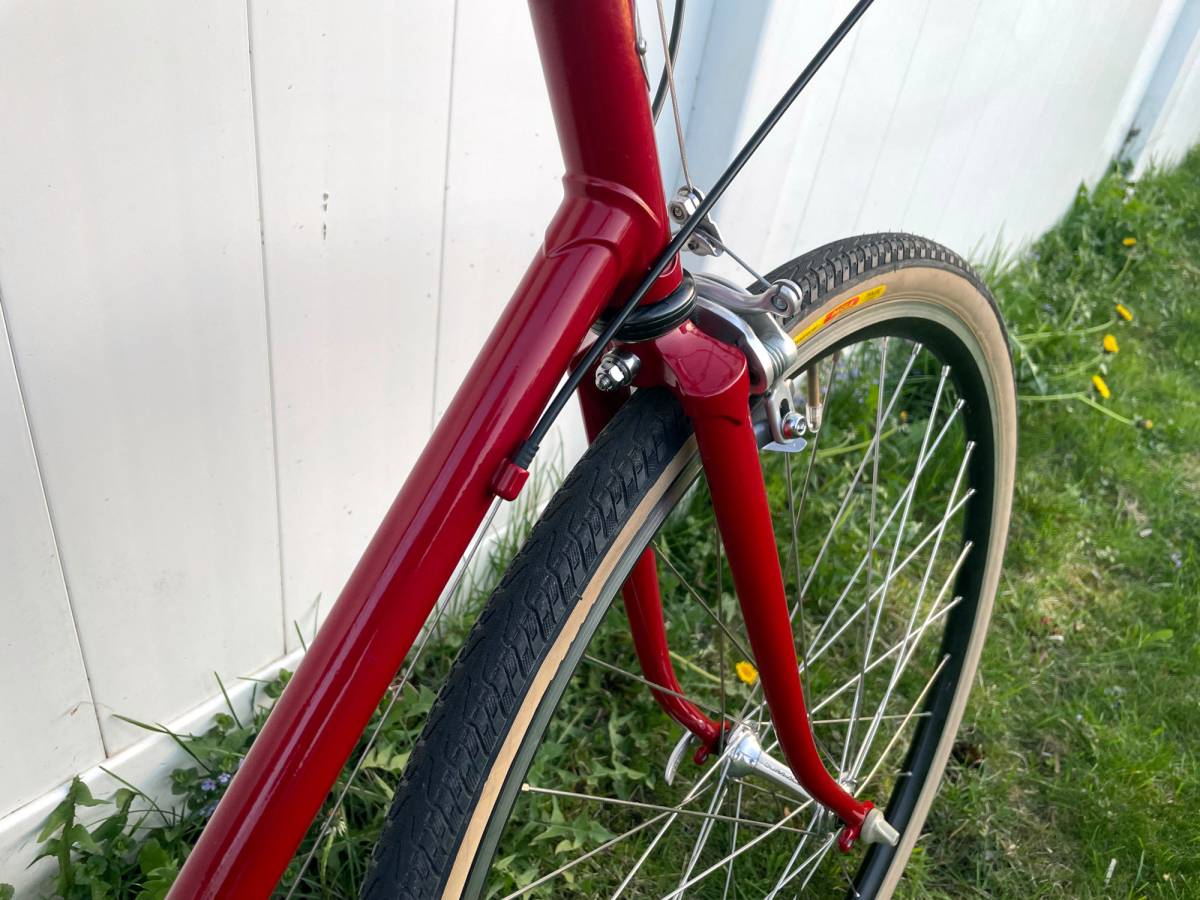
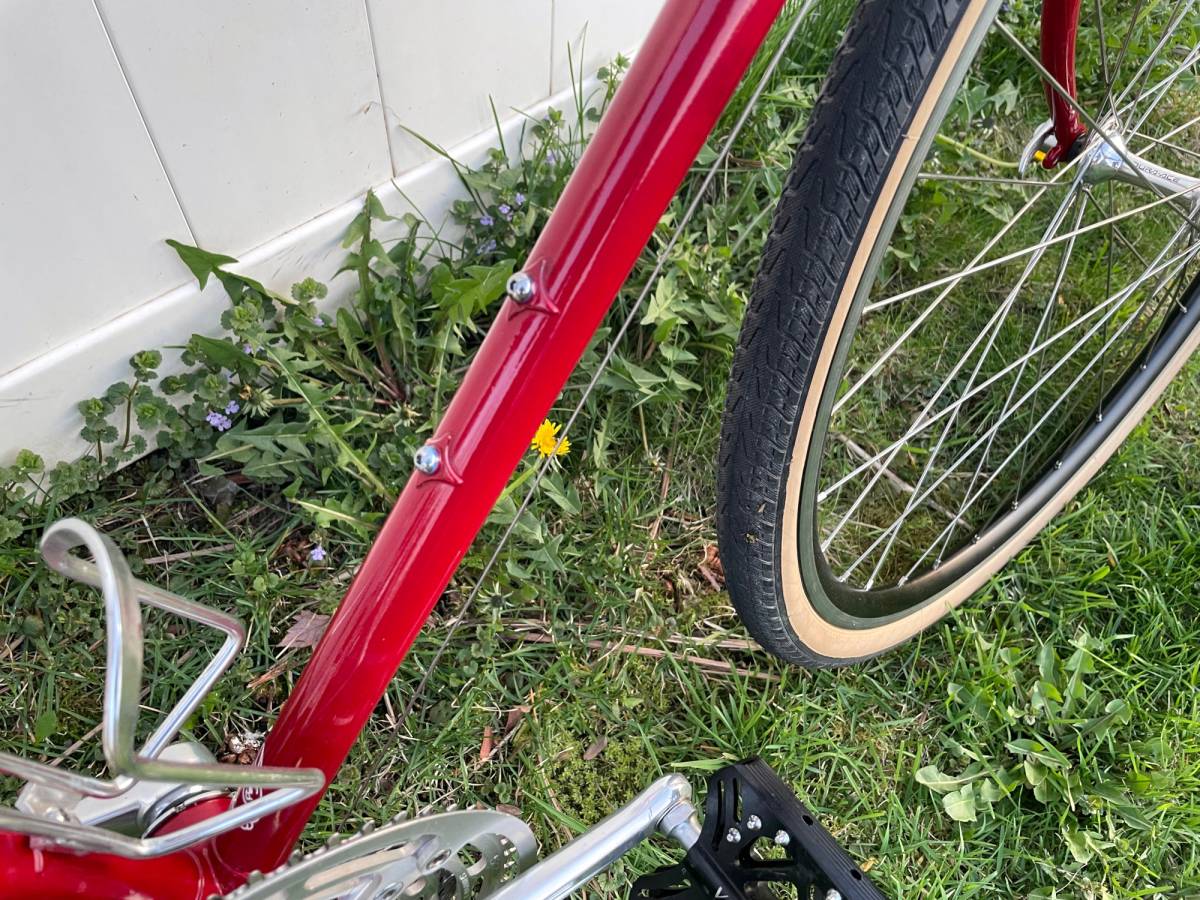
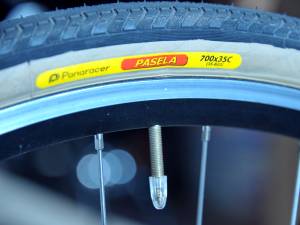
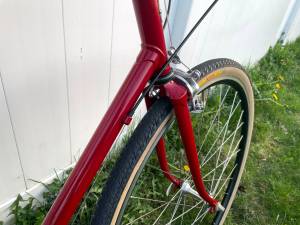
After chasing threads and honing the seat tube, the frame and fork went to Paul Wyganowski for zinc phosphate dip (rust removal/inhibitor) and powder-coat: Cherry Bomb metallic red. While I was there, I also dropped off a set of used Dura-Ace hubs (FH-7401/HB-7400) that I had overhauled and a set of used 700C x 24mm Hed rims: it was time for my brother to ride 700C wheels so his tire choice was wider (literally and figuratively): 700C x 35mm (33mm actual). He rides on a lot of unpaved roads, so this would be a lot more comfortable than the 27″ x 1-1/4″ (1-1/8″ actual) tires he rode before.
Decoration

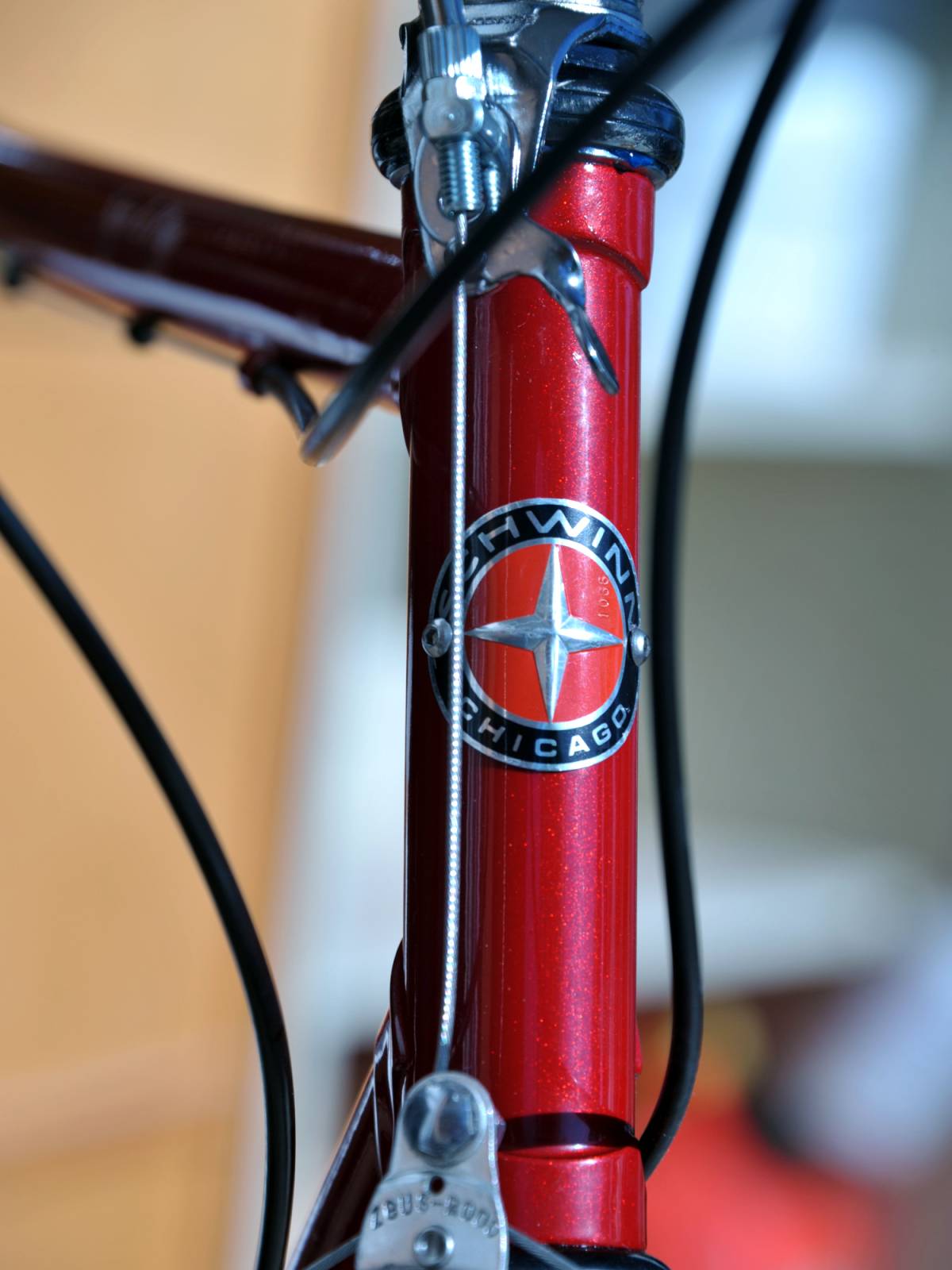
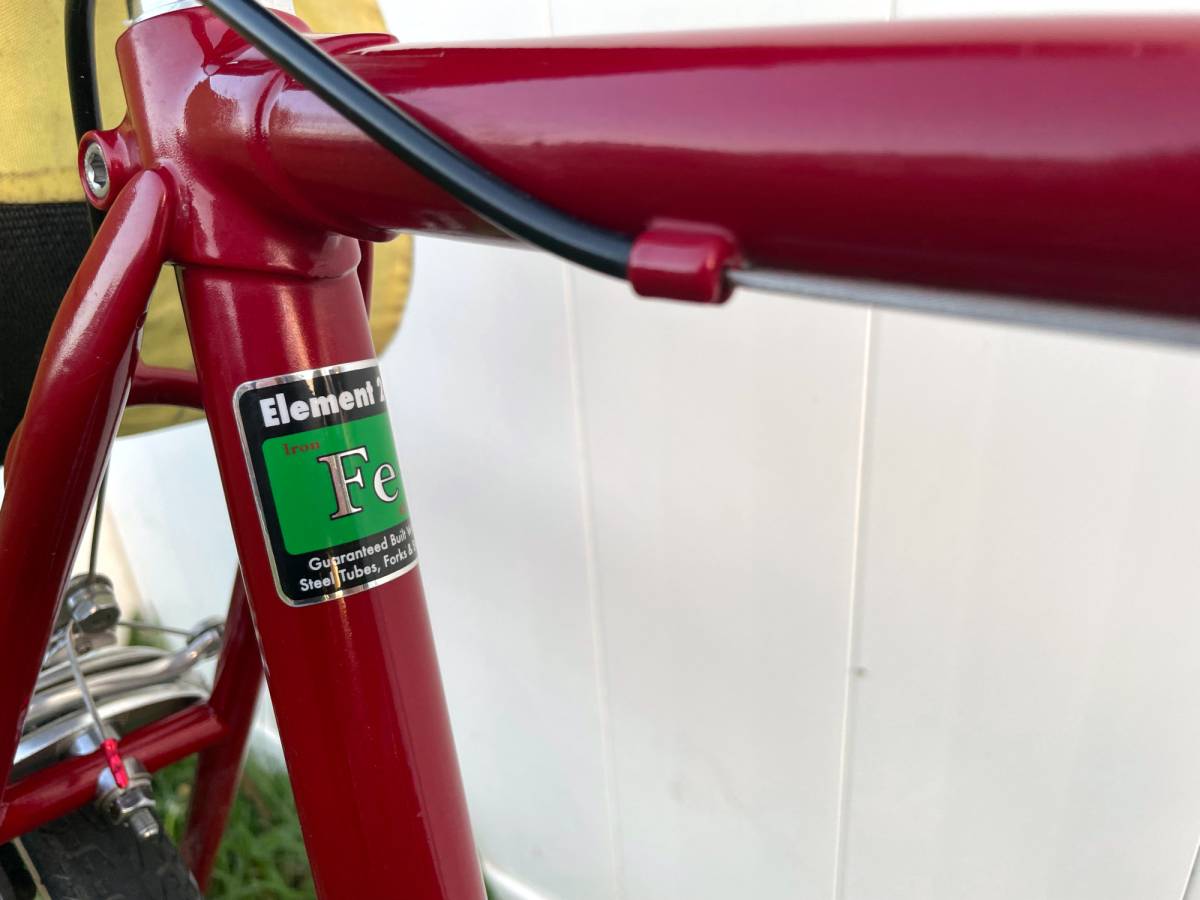
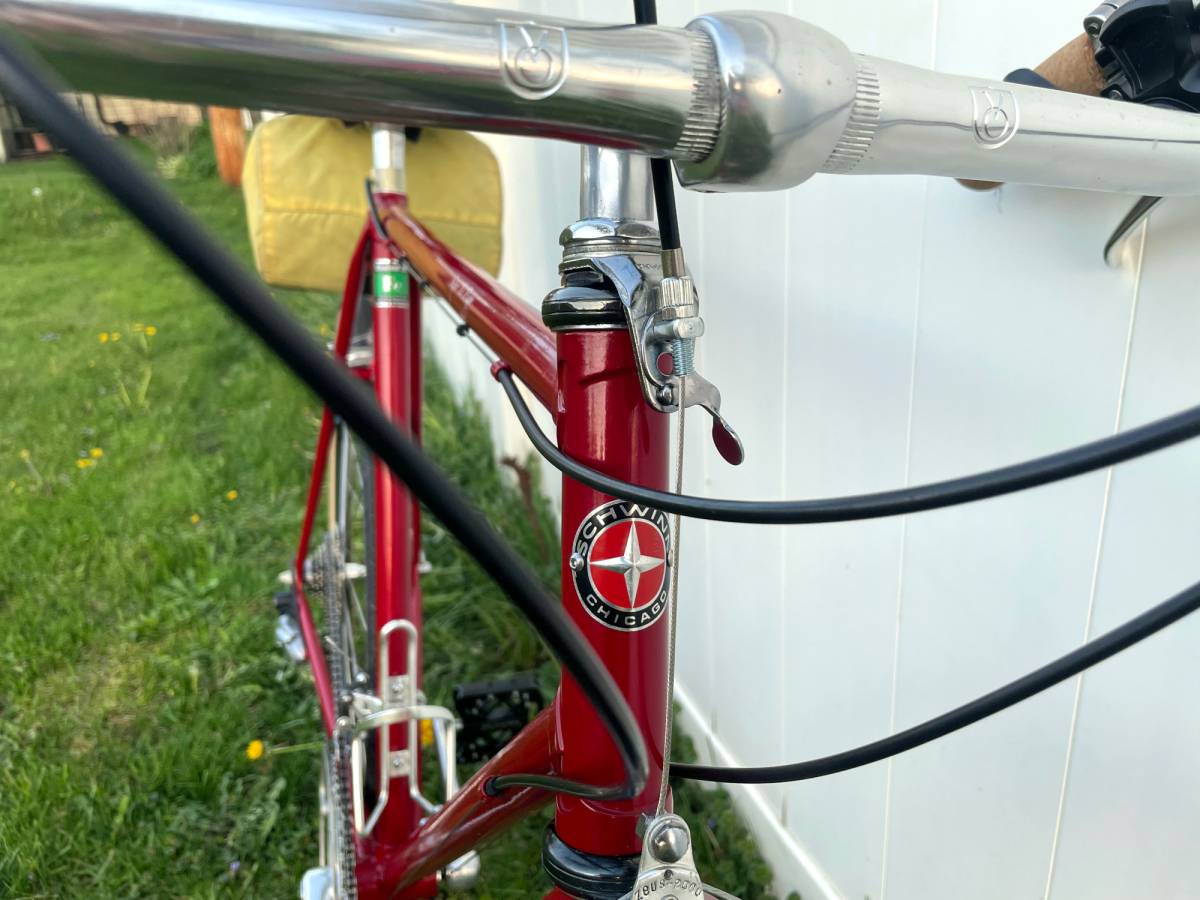
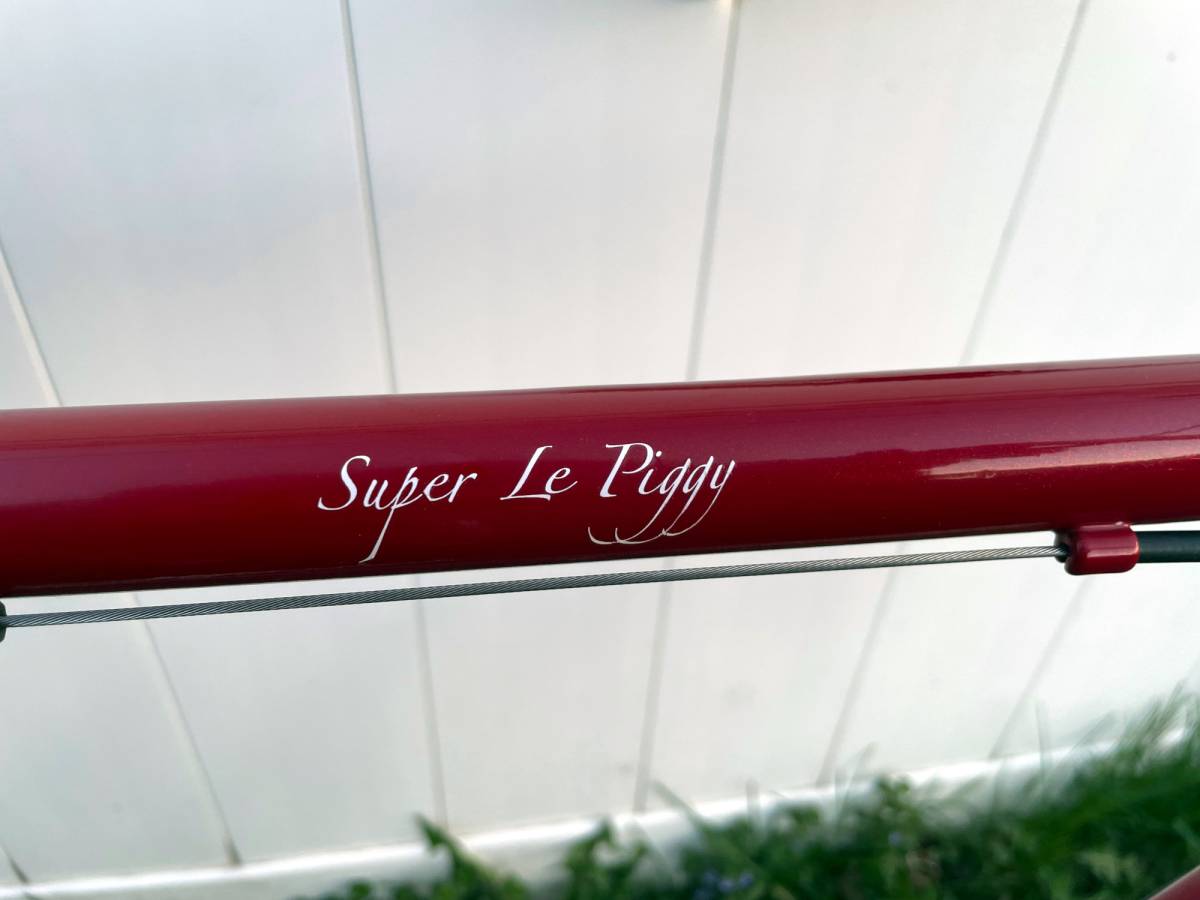
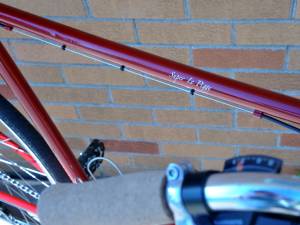
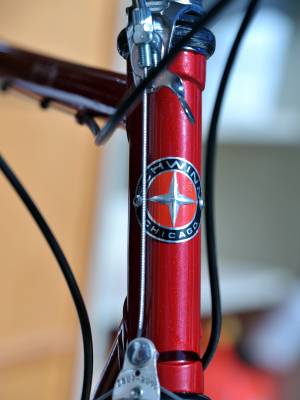
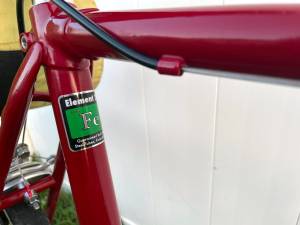
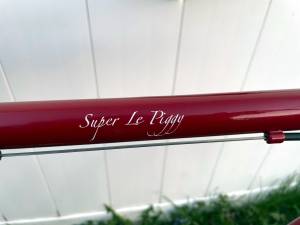
After the wheels, frame, and fork were done, I picked them up and returned to my workshop for the next step: decoration. The powder-coat turned out beautifully. But, I wanted to personalize my brother’s bicycle with a top tube label, generic tubing decal, and my happy bunny seal of approval. These were applied and then a two-part epoxy clear-coat was applied to protect them from damage. Not a complicated procedure, but it added some personalization to the frame. Back in 1985, the Schwinn head badge disappeared. Maybe my brother still has it? I didn’t ask because it didn’t matter. Instead, a “Schwinn Chicago” head badge from my parts drawer was fastened with two M3 button head Allen screws to the head tube (see photo at top of page).
Parts
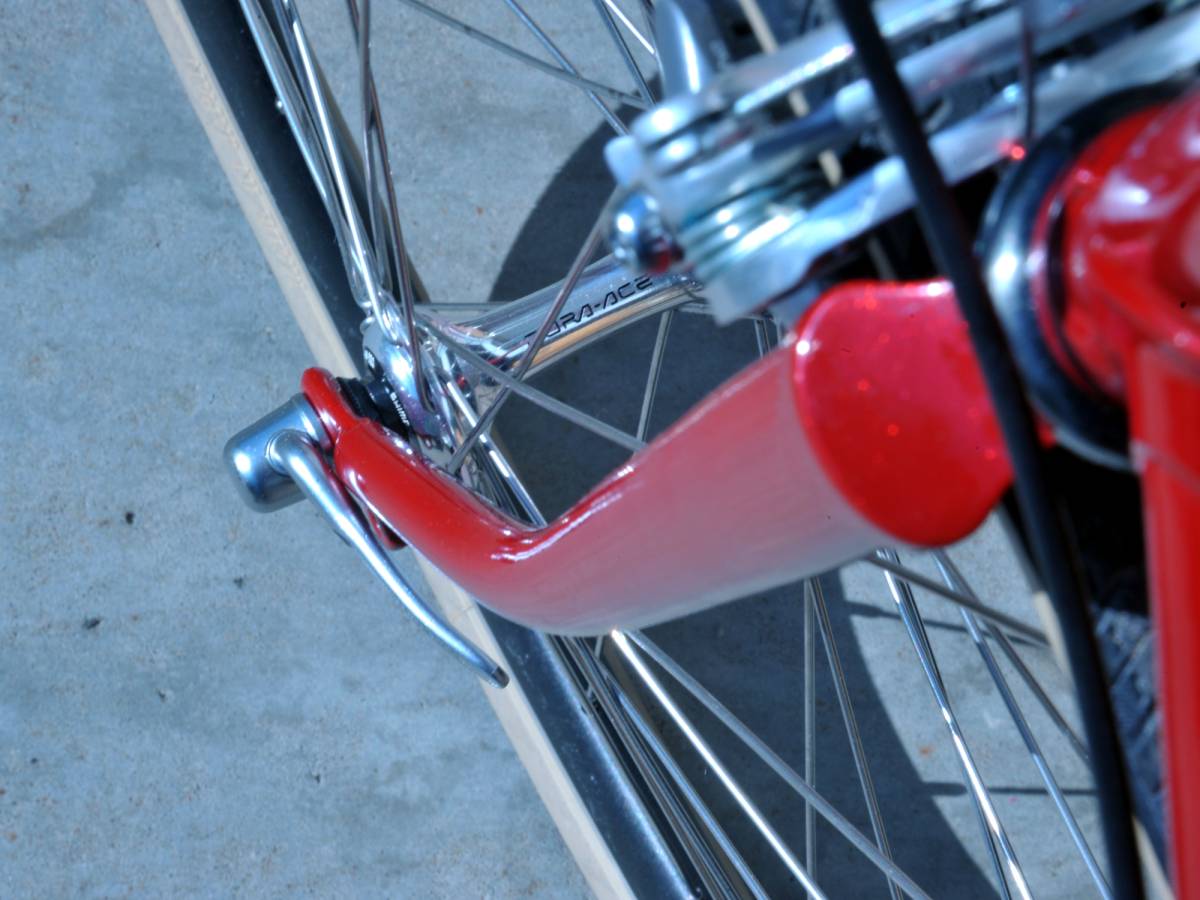
I disassembled, degreased, washed, polished, and overhauled every part on this bicycle. Only parts that actually needed replacing due to wear, safety issues, or sub-par function were replaced. New cable housings and stainless steel controls cables were fitted. A KMC 8-speed chain replaced the heavily rusted Sedis chain. The old Shimano 600 quick-release skewers were retired in favor of some newer Shimano 105 skewers with tan plastic nut covers. The newer Brooks B-17 saddle and Velo-Orange platform pedals were perfect as-is already.

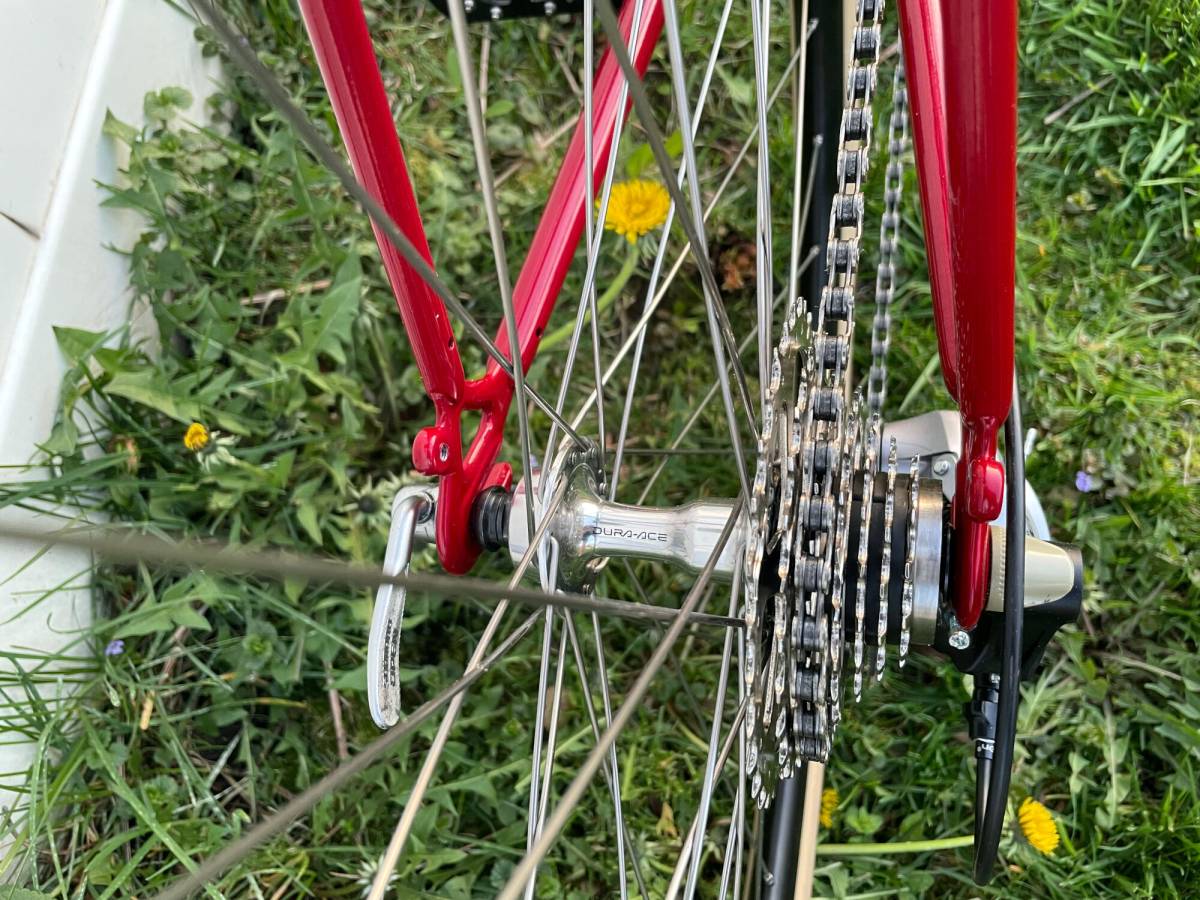
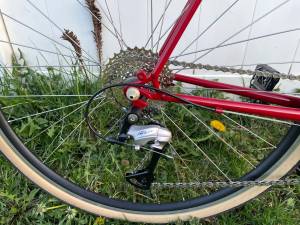
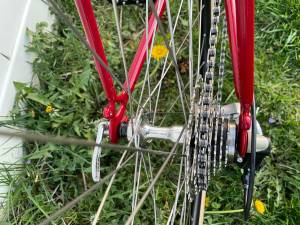
The most dramatic, qualitative change made to this bicycle was the upgrade to the wheels and the extended gear range from before (13-24T, six-speed). The Dura-Ace hubs were from my used parts stash. Their only defect was cosmetic: a set of scrapes in the rear hub body on the non-drive-side. Going from a hub with thread-on freewheel to one with a cassette freewheel (and, most importantly, outboard bearings), mitigated the chance for bent axles and broken dropouts in the future.
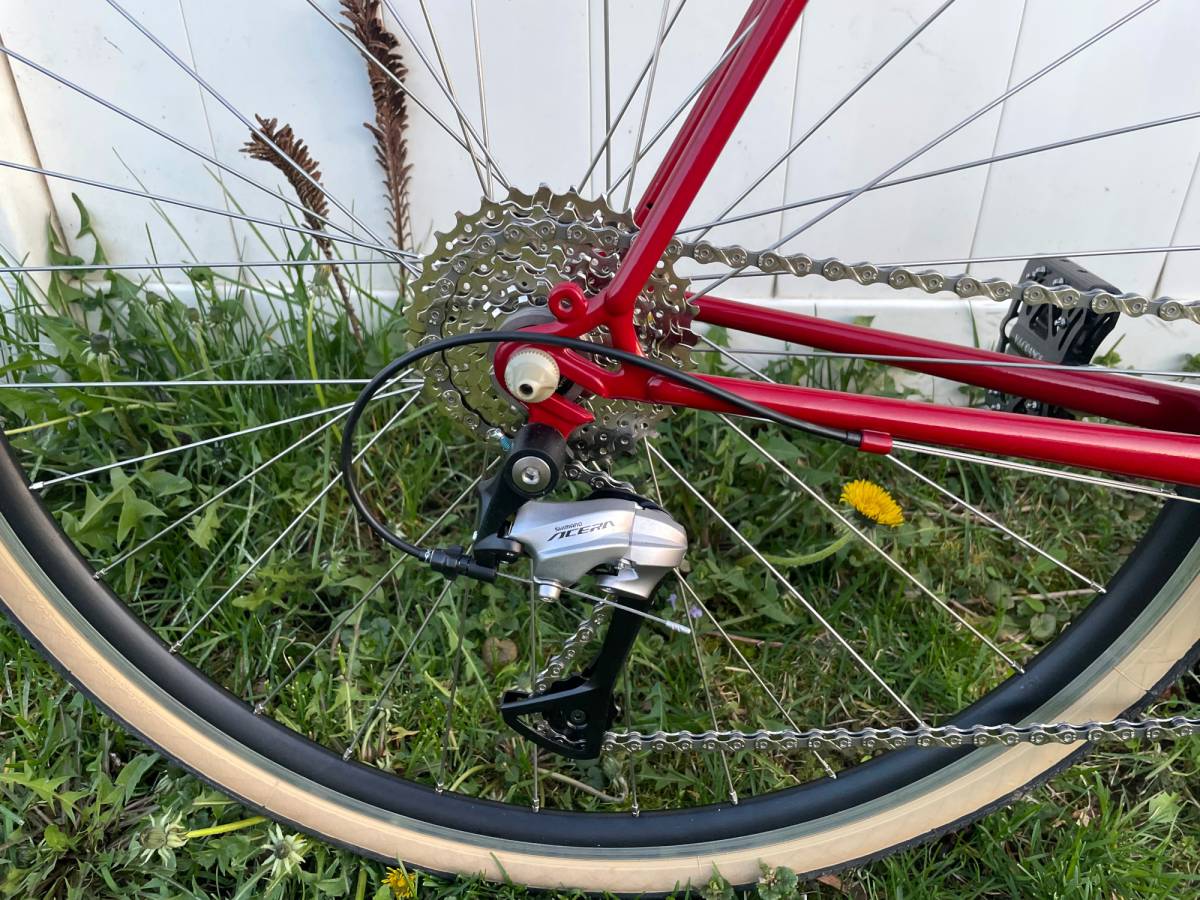
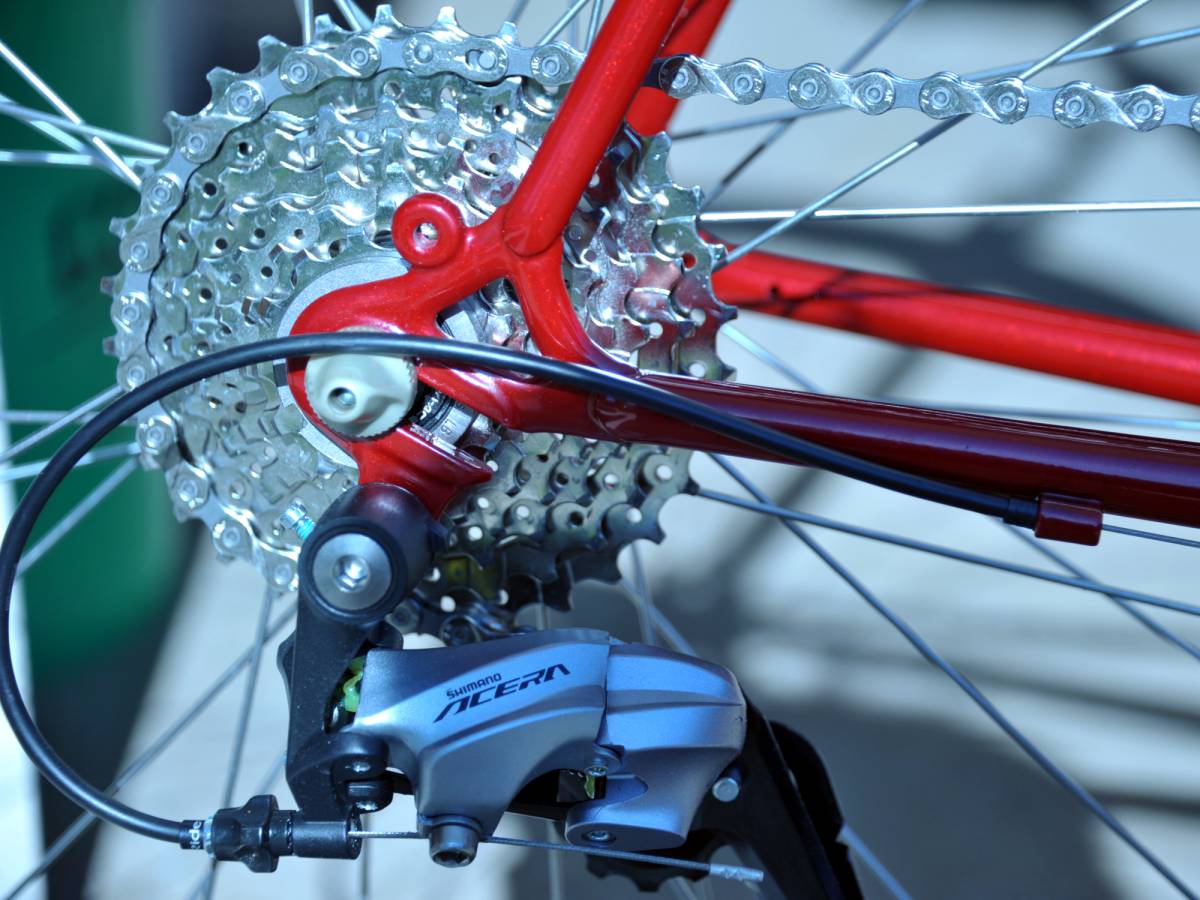
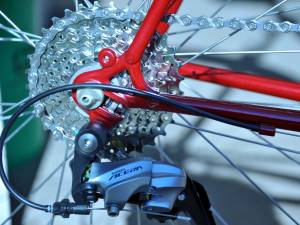
I didn’t have any old, wide-range UniGlide cassettes in my parts stash, and vintage UniGlide cassettes with the range I wanted were not an economical option. Modern HyperGlide cassettes can be used with older UniGlide cassette bodies with only minor modification, however. The single set of wide splines on each HyperGlide cog were modified with a file to fit the evenly sized splines of the UniGlide cassette body. A quick and simple fix. The cogs of the CS-HG50 cassette are pinned together, so maintaining their proper orientation for optimal shifting was not affected. An old, last-position Dura-Ace UniGlide cog was converted into a lockring for the HyperGlide cassette, replacing the separate, last-position HyperGlide cog, giving a useful 13-32T gear range.
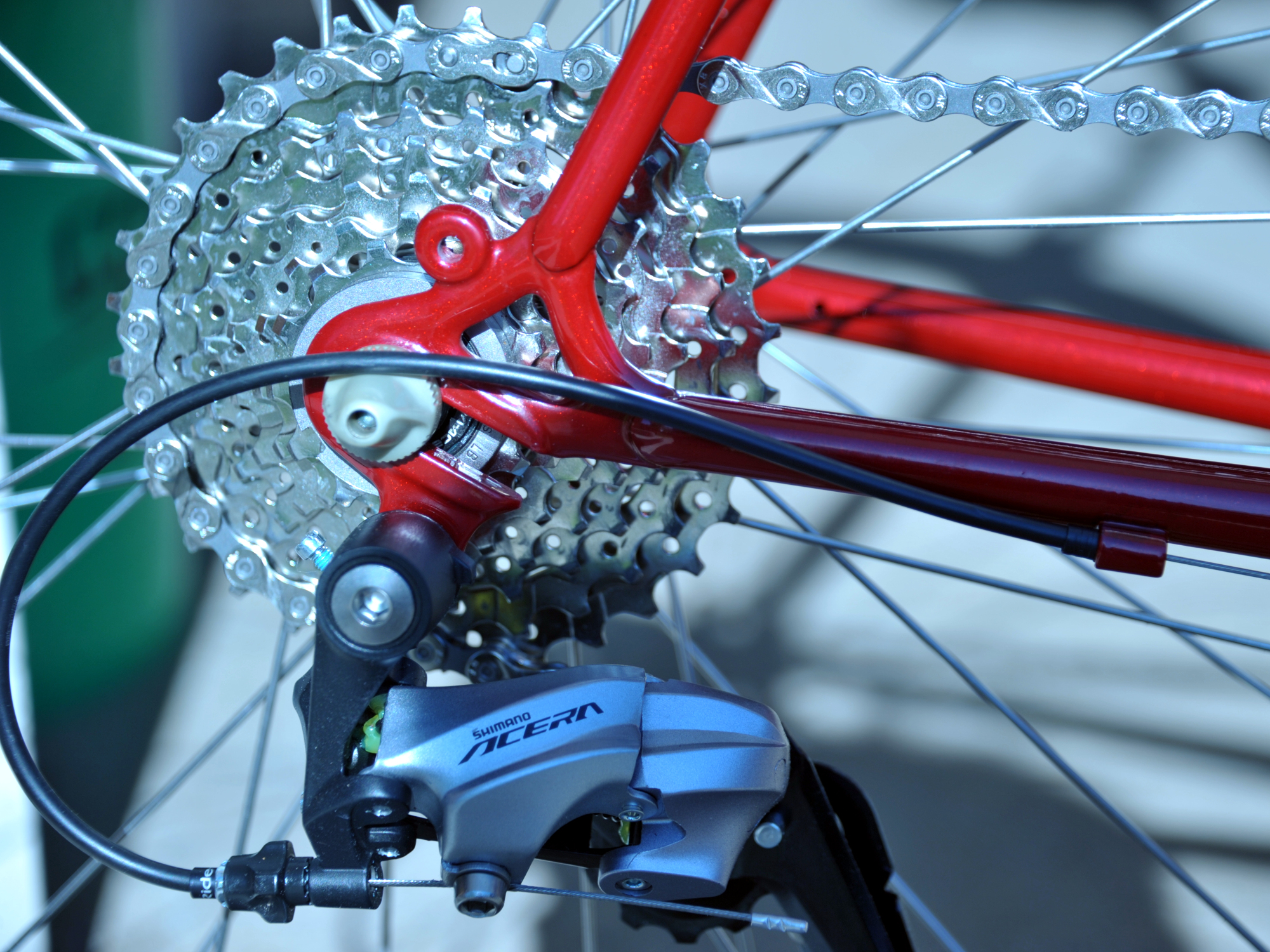
The wide-ratio rear cassette required replacing the SunTour Superbe rear dérailleur, which was limited to a 24-tooth large cog. The sturdy, economical, and excellent-shifting Acera rear dérailleur was a functional replacement, although not an elegant one. Indexed, Shimano 8-speed RapidFire shift levers replaced the poorly functioning SunRace down tube shift levers. The clamp-on SunTour XC front dérailleur worked very well and was reused.

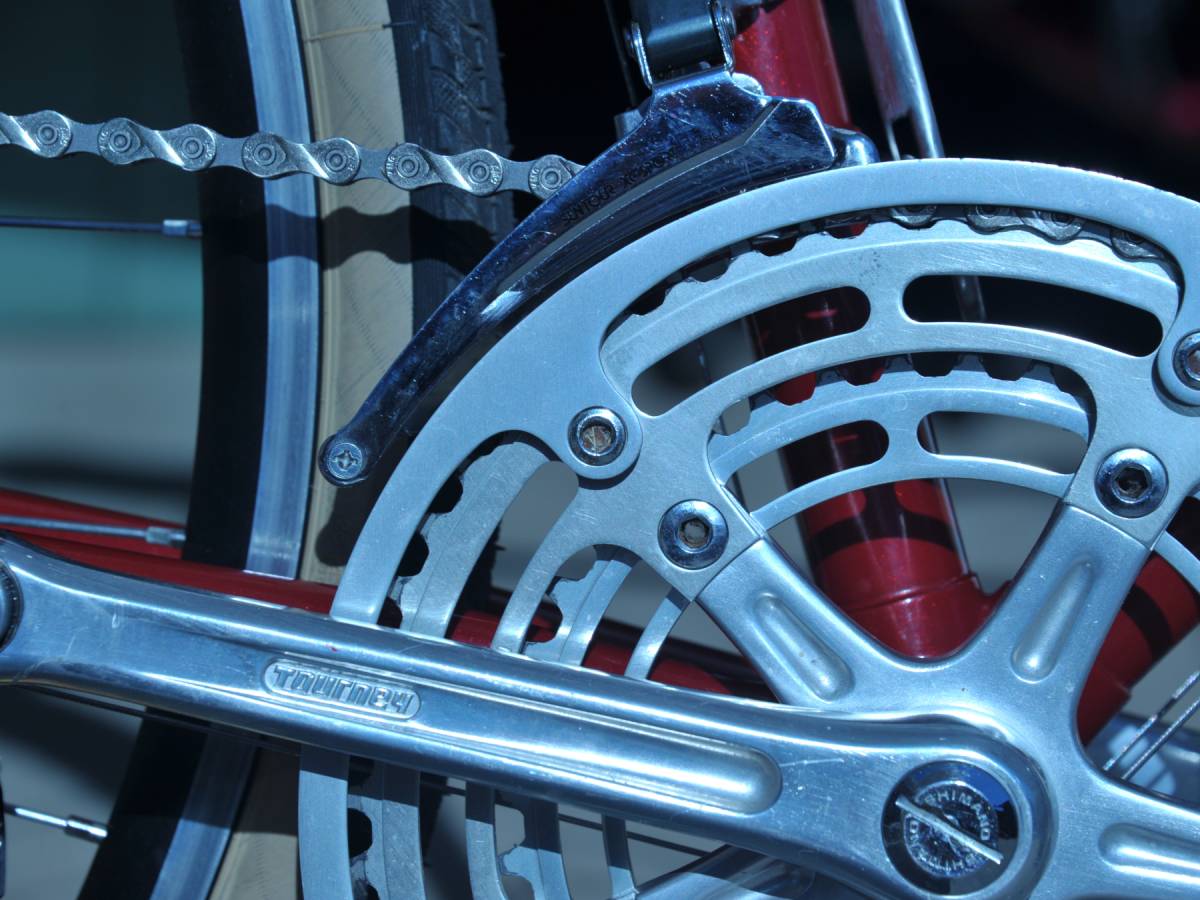
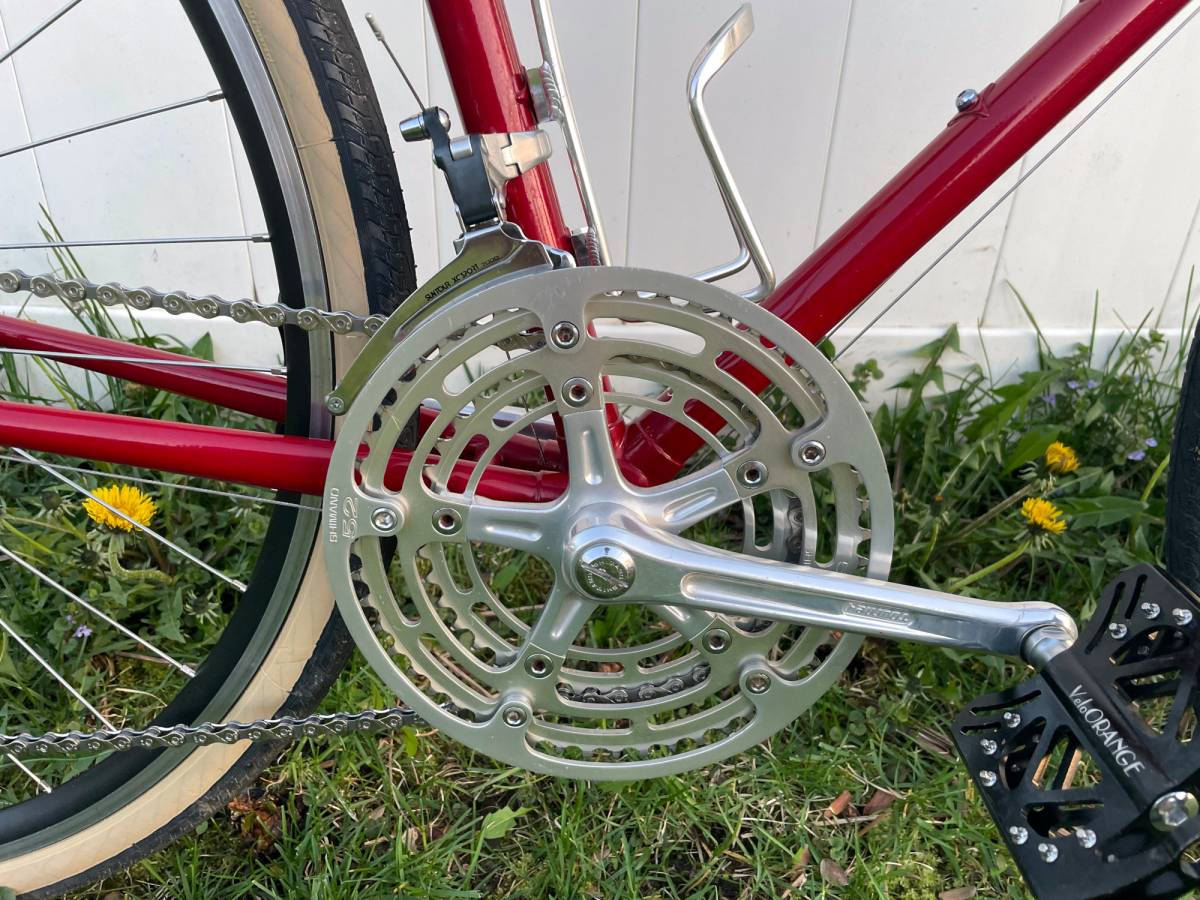
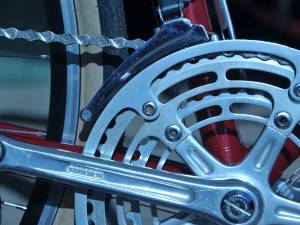
Deep grooves had been worn into the original Takagi crank arms near the pedal spindle, perpendicular to the long axis of both the crank arms and pedal axis, due to rubbing from the toe straps. It was time to replace the crankset. I just happened to pick up a used Shimano Tourney crankset with bottom bracket bearing assembly from the same era. This crankset was visually identical to the Takagi crankset it replaced. It was also visually and functionally like-new, after some scrubbing and polishing. A bonus was the aluminum chain guard affixed to the outer chainring and a lower low gear than the original (39-tooth vs. 42-tooth).
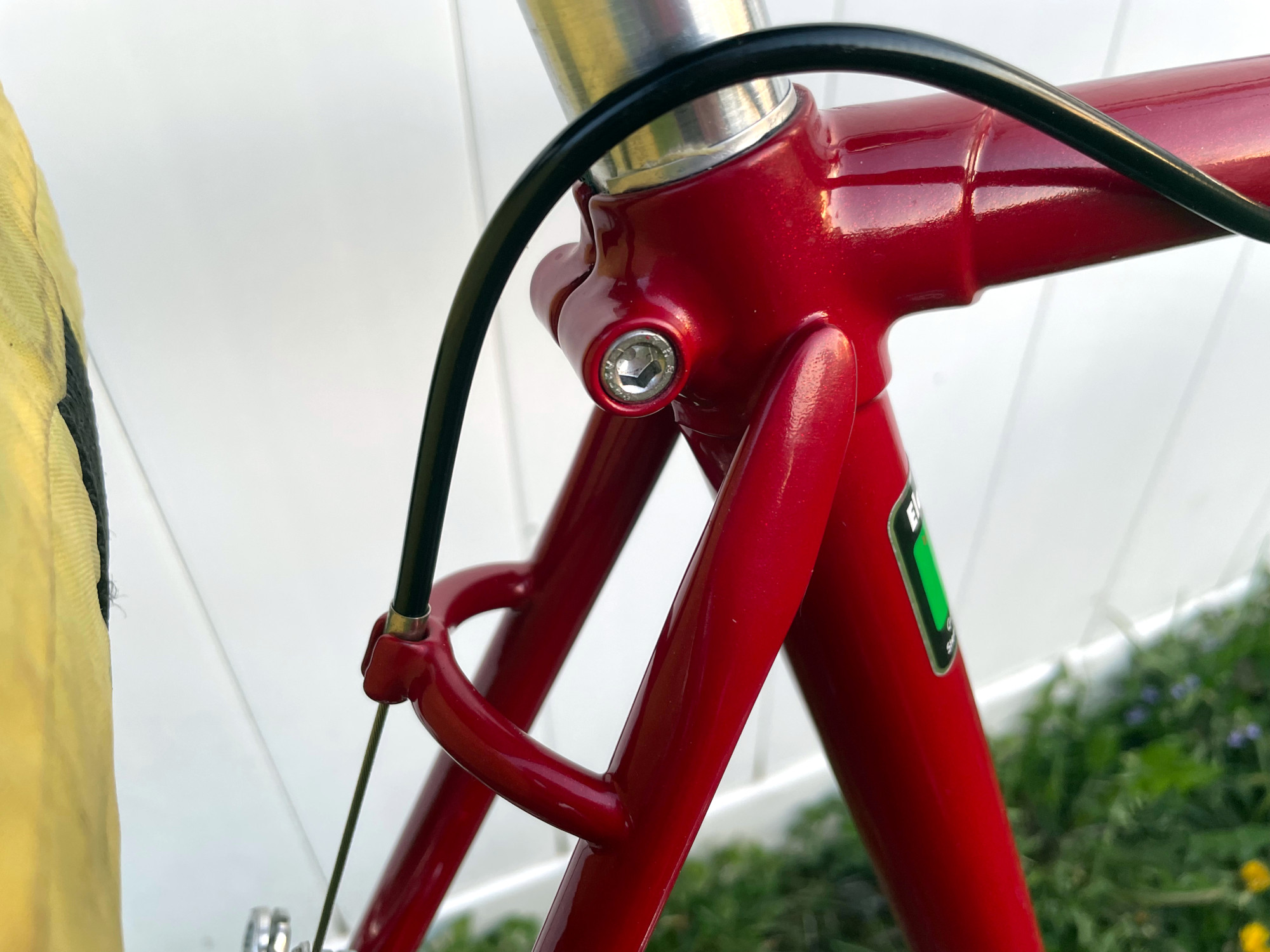
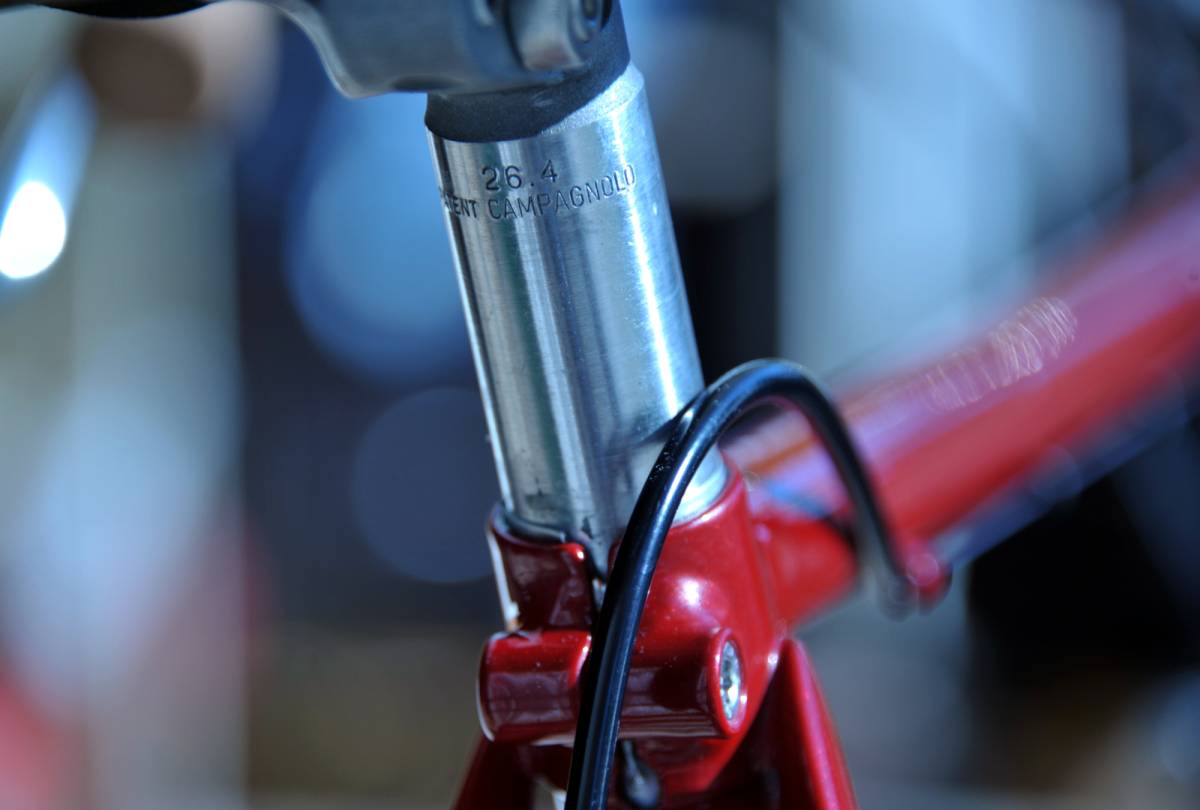
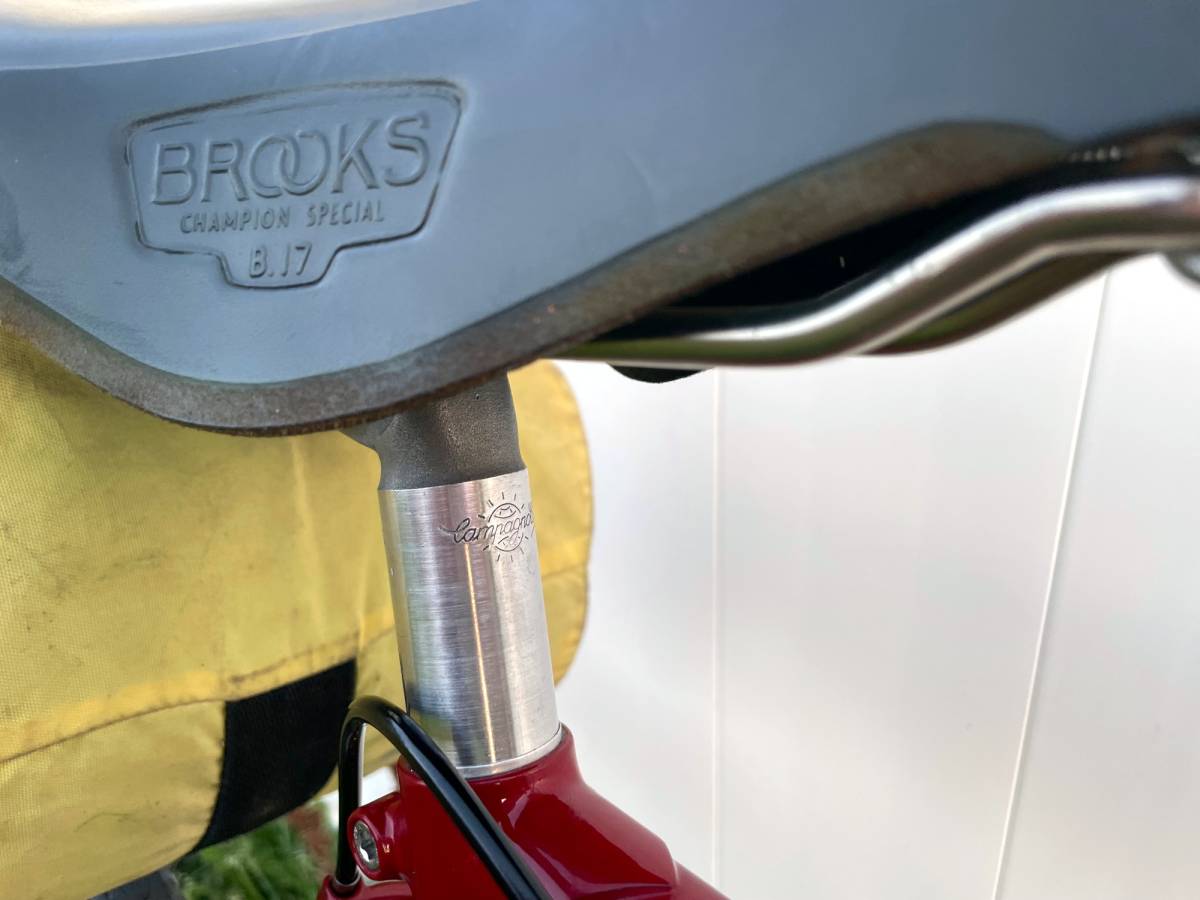
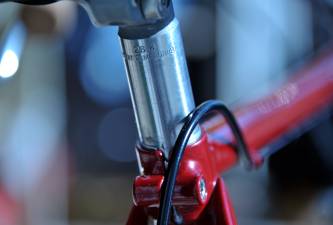
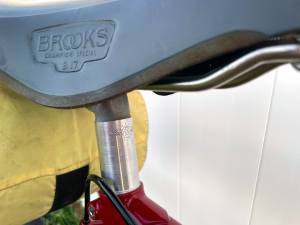
Beside the parts already mentioned, the horribly mutilated SR seatpost was replaced with a vintage Campagnolo Nuovo Record 26.4mm seatpost from my used parts stash. The seat tube actually required a 26.6mm seatpost for a perfect fit, of which I had none. But, why buy new when Campagnolo will do? A shim made from an aluminum root beer can worked perfectly well, especially with the new seat binder.

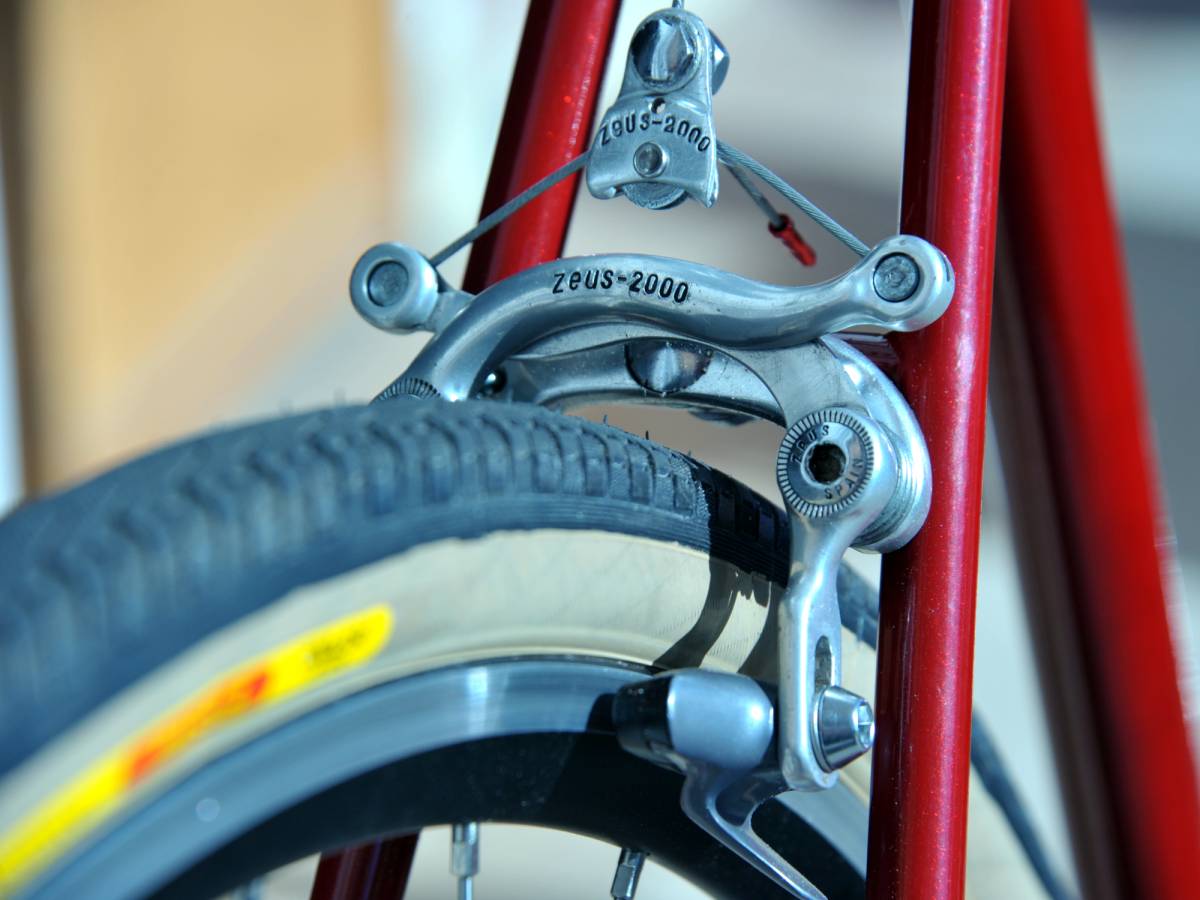
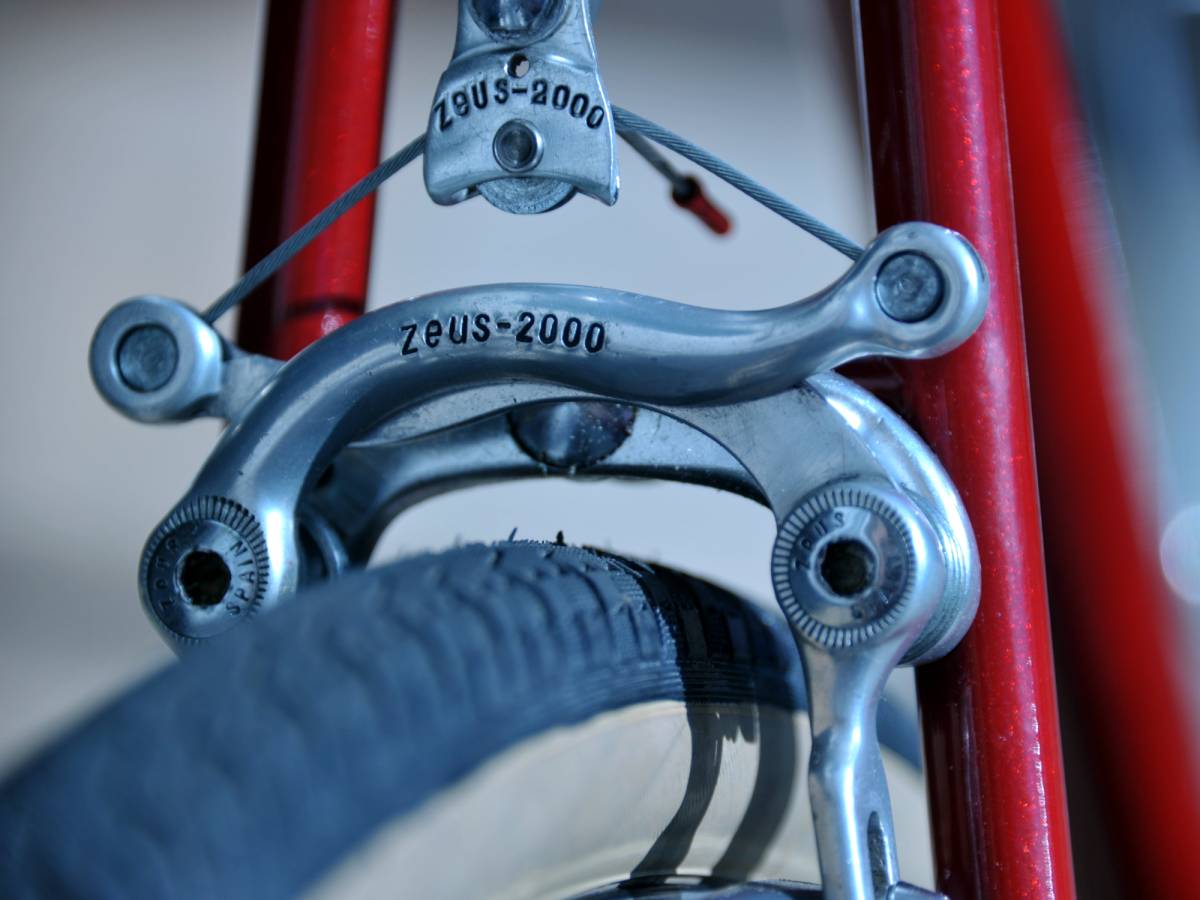
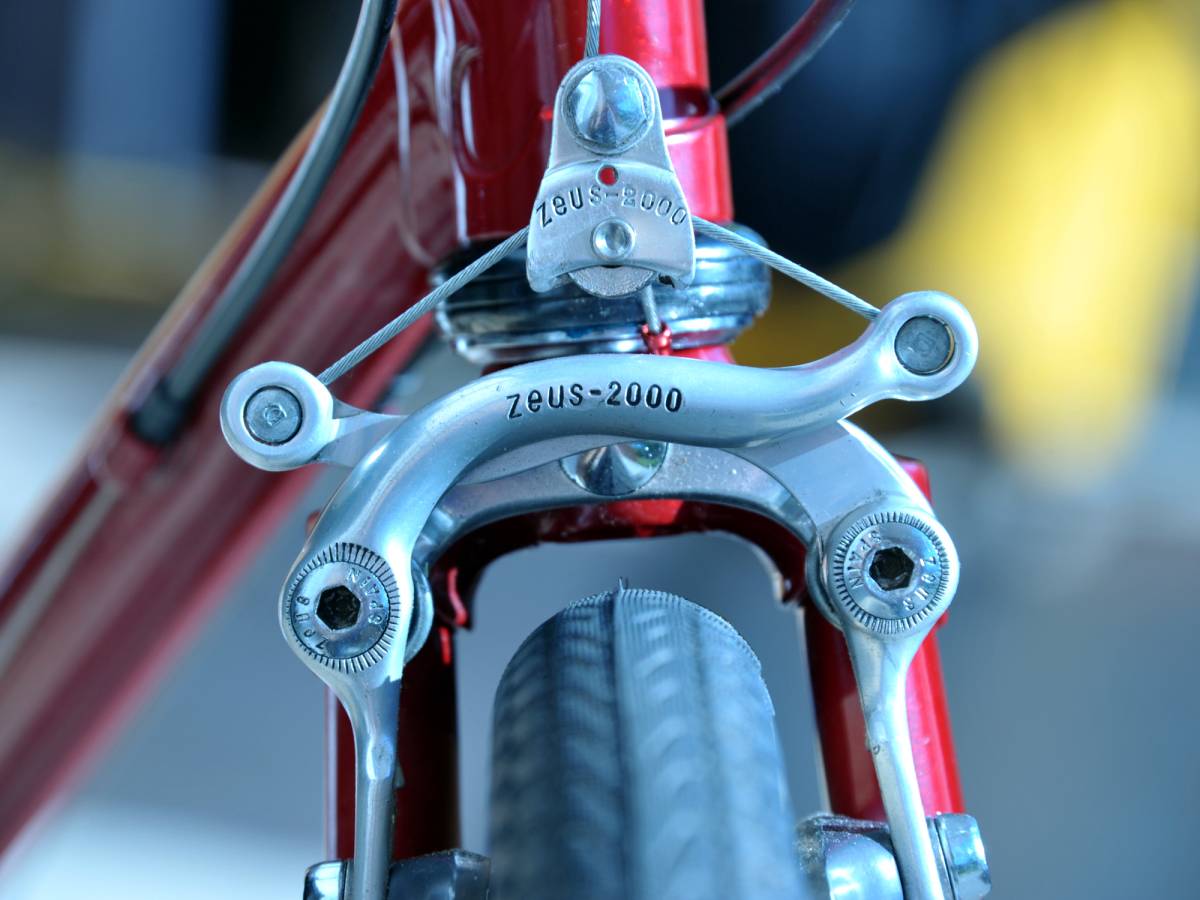
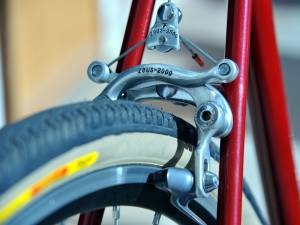
The nearly 50-year-old Zeus 2000 center-pull brakes were given an overhaul and new Dura-Ace brake pads (BR-7400) from my spare parts stash. They work just as well as when they were new: not the best stoppers, but not the worst. Much better than the original Dia-Compe “G” side-pulls…
Assembly
Here’s the parts list, updated since the bicycle was first assembled:
| Part | Description |
|---|---|
| Bell | Velo-Orange temple bell - Al alloy, brass |
| Bottom bracket | Shimano (refubished) - Fe alloy, silver, loose-bearing, JIS |
| Brake levers | Tektro (SL-750) - Al alloy, silver, quick-release |
| Brake shoes/pads | Shimano Dura-Ace (BR-7400) - Al alloy/abrasive, grey/black |
| Brakeset | Zeus 2000 (refubished) - Al alloy, silver, center-pull |
| Cassette | Shimano Claris (CS-HG50) - Fe alloy, silver, 11-32T, 8-speed |
| Chain | KMC X-8 - Fe alloy, 3/32", silver |
| Crankset | Shimano Tourney (refubished) - Al alloy, silver, 170mm, 39/52T, chain guard, two-piece swaged |
| Shift lever | Shimano Altus (SL-M315) - Al alloy, black, handlebar-mount, RapidFire 8-speed |
| Dérailleur – front | SunTour XC Sport (7000) (refubished) - Al alloy, dark grey/chrome, clamp-on |
| Dérailleur – rear | Shimano Acera (RD-T3000-SGS) - Al alloy, black/silver, long cage |
| Handlebar grips | Velo-Orange (refubished) - synthetic cork, tan |
| Handlebars | Velo-Orange Left Bank (refubished) - Al alloy, silver, 49cm x 25.4/22.2mm |
| Headset | Shimano STX (HP-MC30) - Fe alloy, chrome/grey, 1", cartridge-bearing |
| Pedals | Velo-Orange Sabot - Al alloy, black |
| Seatpost | Campagnolo Nuovo Record (refubished) - Al alloy, silver, 210mm x 26.4mm |
| Stem | SR FX (refubished) - Al alloy, 110mm, silver, high-rise |
| Saddle | Brooks B17 - CrMo/leather, black |
| Tires | Panaracer Pasela TourGuard - black/tan, 700C x 35mm (33mm), wire bead |
| Inner tubes | Panaracer - butyl, 60mm Presta (28-45mm), chromed |
| Hub - rear | Shimano Dura-Ace (FH-7402) (refubished) - Al alloy, silver, 32-hole, 130mm |
| Hub - front | Shimano Dura-Ace (HB-7400) (refubished) - Al alloy, silver, 32-hole, 100mm |
| Rims | Hed Belgium Plus (refubished) - Al alloy, silver, 700C x 24mm |
| Rim strips | DT Swiss - plastic, red, 700C x 19mm |
| Spokes | DT Swiss - 14ga, 3x lacing |
| Quick-releases | Shimano 105 (refubished) - Fe alloy/plastic, matte chrome/beige |
| Water bottle cage | Velo-Orange Moderniste (refubished) - SS alloy, polished |
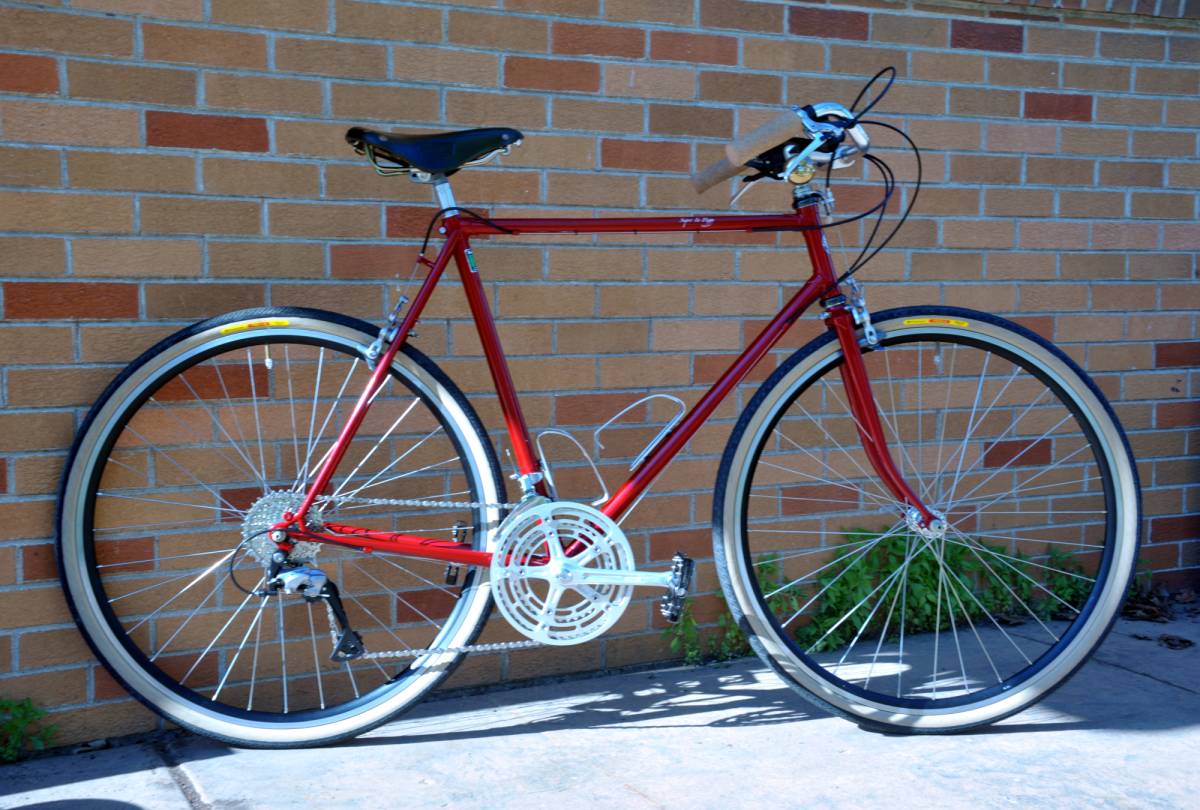
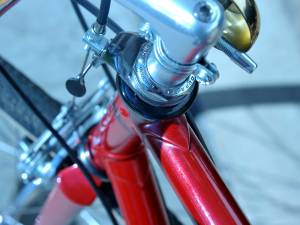
The photos shown here were taken shortly after the bicycle was assembled, prior to test riding and before more recent changes, reflected in the parts list above.
For now, here is my brother’s 1976 Schwinn Super LeTour 12.2, before the test ride:



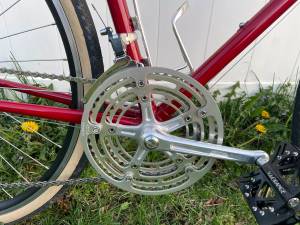
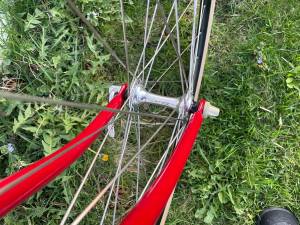
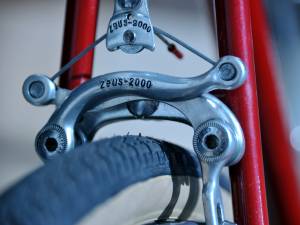
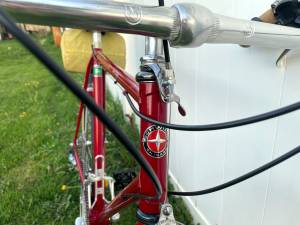


Afterwards
One issue presented itself immediately during my first test ride: over-looked Brinelling of the bearing races in the first-generation Dura-Ace headset (ca. 1979) caused some indexing when the headset was adjusted properly, which could be felt while riding and made steering unpleasant. I replaced the Dura-Ace headset with an economical Shimano STX (HP-MC30) cartridge-bearing unit I had on-hand. That fixed the problem. Otherwise, the brakes worked well, the shifting was excellent, and the bicycle floated smoothly, silently, and comfortably over the poorly maintained roads around the workshop. Would my brother like the update?
Surprise! Yes, he liked it very much. Except, another problem presented itself when my brother first rode the bicycle with the new, upright handlebars: he didn’t like the sweep that positioned his hands thumbs-forward instead of -opposing. He wanted more of a mountain bike-style handlebar than a tourist-style upright handlebar. That fix remains to be performed, once he brings back his Schwinn for another “tune-up”, along with the BMX-style handlebars he selected for himself. An update for the Fall of the Year.
Do you have a sibling who needs their old bicycle refreshed? Well, you can contact this curmudgeonly repairman to have it done right and with great care.